The other day, I watched The Many Adventures of Winnie the Pooh for the first time in at least a decade, possibly two. It was that surreal experience of rewatching a film you haven't seen since you were a young child and still somehow remembering all the words because you watched it so often then, they stuck in your mind for years.
The first two stories are pleasant, but I found the third one absolutely fascinating in terms of my own life and who I've become over the last few years.
It's the story of Tigger, who bounces everywhere and all around people's lives without regard for them, and Rabbit, who is driven absolutely crazy by Tigger's bouncing and will go to any lengths to stop it. And all I could think of as I watched was, "...That's absolutely me and some of the extroverts I've known."
Most of my extrovert friends are kind, gracious people who are beautifully aware of themselves and don't just steamroll over others. But I have known a few who... did not have that self-awareness and happily just bounced themselves into my life, uprooting my garden and destroying my house and insisting that bouncing is what they do best and if I was upset by it, that was my fault, not theirs.
I saw poor Rabbit constantly harassed by Tigger, who, despite Rabbit clearly being uncomfortable with him, continued to push and push, determined that he could get Rabbit to see his way eventually.
And... I'm not sure how I feel about the ending.
For those of you who don't know the story, Rabbit gets completely fed up with Tigger making a mess with bouncing and attempts to lose him in the woods forever (which, sheesh, is kind of dark) only to get lost himself and need to be rescued. A bit later, Tigger bounces himself up a tree and gets stuck because he's afraid of heights, and he rashly promises that he'll never bounce again if only someone will help him get back down. When he does return to the ground, Rabbit holds him to his promise and Tigger, crestfallen, walks off, and then Pooh and all of his friends lament how sad Tigger is and how they "like the old bouncy Tigger best," and then Rabbit says he guesses he does too (though I am not entirely convinced he meant it -- he was pretty clearly being guilted into saying it), and then everyone is happy and they all bounce together.
That's not really the answer I was looking for as an introvert. Because while I don't think Rabbit should keep Tigger from bouncing forever, the fact is, Tigger is still going to make a mess of Rabbit's life with his bouncing, and that's never really addressed. The actual answer would be for Rabbit to say, "Here, bounce as much as you like, but don't bounce me," and Tigger would say, "Sure thing," and then everyone would really be happy.
As an introvert, the last thing I want to be told is that if I just lighten up and realize that the extrovert really is the fun one, I'll be happy. Because I may be having a perfectly good time by myself, and for an extrovert to come along and disrupt that for their own enjoyment shouldn't be something that's OK.
This definitely didn't hit me the last time I saw this movie -- but the last time I saw it, I didn't know I was an introvert, let alone that it was OK to be one. It does a pretty good job of setting up the story as if both the introvert and the extrovert would see the error of their ways and change to help the other... but in the end, only the introvert actually does. The extrovert doesn't have to change a thing. That doesn't seem quite fair to me, and it's a little disappointing for a story I loved so much as a kid.
Showing posts with label introverts. Show all posts
Showing posts with label introverts. Show all posts
Friday, January 8, 2016

Wednesday, November 18, 2015
Answering More Extrovert Questions!
Back in May, I wrote a blog with my own answers to some questions I'd seen extroverts asking about of introverts. Recently I came across another whole post full of questions from an extrovert trying to figure out how we goofy introverts worked. So I figured I'd answer a few of their questions here, just like I've done before. As always, this is just from my own personal standpoint and generalizing a bit about some of the introverts I've spoken with, but here's my take on it. I'd always welcome other introverts' experiences and stories!
Q: Generally, do you want to be encouraged to come out / stay out / etc? I have some introverted friends and they're always going home super early, and I can never tell if I should be trying to get them to stay out. Or trying to get them to come dance with us, etc.
A: Awesome question. Remember that "encouraged" is not the same as "pushed." I like to be invited to spend time with our friends -- it's always good to know that you'll be missed if you're not somewhere -- but if I say no, I don't want any more pushing than, "Are you sure? We'd love to have you" or, "Aw, I'll miss you!" If I say no again, respect that "No," because then it's not encouraging, it's implying that I don't know what I want, which is often just not true.
Q: What could I do to make a party more fun for you? Let's say I'm the host. Have video games and a pet? A 'quiet room'? Should I start a conversation with someone who's by themselves, or is that putting them on the spot?
A: Having activities around for me to participate in is always great. I'm terrible with small talk and mingling and don't enjoy it at all, so having a game or a movie that I can plop myself in front of and interact with people during makes it much more likely that I'll enjoy myself.
But, yes, absolutely start a conversation with someone who's by themselves! As long as it's just you talking to them, it shouldn't be putting them on the spot, although if they freeze up for some reason you might want to make it a quick one. Once I get going in a conversation I'm good, but getting started can be a real pain.
Obviously if you're a host you can't just spend the whole night just talking to me, but extroverts sometimes excel at being "transitioners." Those are the people who can start up a conversation with someone, say, "Oh, man, you should talk to so-and-so over there, they love this kind of stuff," and then call so-and-so over, make introductions, and get the conversation rolling before taking off to do something else. That's the kind of thing I find especially unpleasant, forcing myself into other people's conversations and finding something to discuss, so if you have an opportunity to facilitate it for us as an extrovert, that takes a lot of pressure off us and can make for a much easier time.
Q: How can you tell if an introvert doesn't like you? If they do?
A: Well, some introverts will be pretty straightforward about it. Shyness is not intrinsic to introversion. But for people like me who are nonconfrontational, the #1 sign that an introvert likes you and is comfort around you is that they make space for you in their life. I go out of my way to spend time with those who do not drain me (typically those I like). I am polite to those I don't like but don't spend any more energy on them than is necessary, because I want to conserve my energy for those who are important to me.
Q: Is something like dancing / clubbing or going to see a show more appealing to you, since there's no talking?
A: That will for sure vary based on an individual's hobbies and interests. I'd be all over going to see a show but I'd give clubbing a hard pass. But, yeah, finding an activity to do together may be more fun for introverts since they can focus their attention on that activity and socialize along the way in a more natural manner.
Q: What part of interaction is tiring, exactly? Thinking of stuff to say? Wondering whether it's the right thing to say? Or what?
A: That can be a thing, but that's more social anxiety specific than anything else, and that's its own thing, though obviously introverts can have social anxiety. For me, it's having to keep up the energy of fake-enjoying the socializing. I frequently don't enjoy socializing until I get into a conversation that's interesting to me, but it's not really acceptable for me to be openly bored with it, so I have to put an unusual amount of energy into faking enthusiasm. And faking enthusiasm is VERY exhausting.
Less tiring social groups for me are ones where I feel comfortable with halfhearted interactions or tuning out entirely when I'm bored, knowing that the people I'm with aren't going to judge me if I check my phone while they talk sports with someone who cares.
Q: When there's something going on that you don't want to go to, what is unappealing about it? Just that you're tired and don't want to be even more tired, or something else?
A: Well, some of it is what I said up above, the effort of faking enthusiasm takes a lot out of me. But frankly, it's usually just that I'd rather do something else. I mean, if you go to a restaurant and you order the food you want, nobody asks you to explain what was unappealing about the other options. You simply chose the one you wanted. And that's what it's like for me most of the time. I love being alone. It's peaceful, I don't have to explain myself, I can do whatever I want without running it by the group. Sometimes it's not that going out is unappealing, it's just... not staying in, which is more fun.
Q: Is hanging out with a few good friends still draining, just less so, or is it a completely different dynamic?
A: Still draining but less so. Mostly because there's less feigned enthusiasm, both because they're comfortable with me zoning out AND because we already have things in common and are more likely to cycle around to things I can be genuinely enthusiastic about. I still need to refresh myself, but hanging out with a small group of close friends is MUCH less draining than a large gathering of mingling with acquaintances.
Q: "You're so quiet" / "How can I get you out of your shell" - these are annoying, right? Why?
A: Yes. Yes, they are. For a couple reasons. For one thing, it's not like we're not aware that we're quiet. Calling attention to it does nothing but make us needlessly self-conscious. I tend to get grumpy when called out on my quietness, because the alternative would be for me to be saying things I thought were boring or useless. If I have something to say, I'll say it.
It also carries a connotation of, "You're not contributing to the group," which is frustrating because, like I said, if I have something to say I'll say it. Contributing meaningless conversation is way worse to me than silence.
Oh, and gosh, "get you out of your shell." Generally the offered solution to that is making me do something that would make me incredibly uncomfortable, because I guess after I do that I'm supposed to be more comfortable with someone who I know at any moment might push me into a situation I don't want to be in? There's really only one good way to "get me out of my shell." Be patient, be consistent, and be friendly, but accept that I make friends slowly and I acclimate to groups slowly, and that's OK. Telling me to get out of my shell is the equivalent of saying, "YOU'RE NOT BEING MY FRIEND FAST ENOUGH," and almost nothing will shut me down faster.
All right, I'm done with my mini rant. On to the next question!
Q: You suggest that introverts generally would prefer silence and their own thoughts to having to discuss something they're not interested in. Do you mean that thing where somebody really really likes video games and won't shut up about video games and you're just sitting there nodding (everybody hates that) or something else? Because I think that very few people will hit upon something they both are passionate about on the first try, and if you give up trying, you'll never find it, right?
A: This is a good point. It's not that I'm opposed to trying. It's that I'm opposed to sticking around with a topic we're not interested in for a socially acceptable length of time. If it was my choice, I'd totally vote for rapidly tossing questions back and forth: "Do you like sports?" "No. Do you like music?" "Yes. I love classical." "Oh. I don't care about classical. But I like showtunes." "I hate showtunes. Where are you from?" "Miami." "Oh, hey, I love the beach!" "Me too!" Cue beach stories, I guess. I don't know, I don't love the beach.
For most people that sounds super bizarre, but for me, dancing around the unacceptable statement of, "Hey, one of us isn't really interested in this, can we move on?" is a frustrating and strange experience. As soon as I find that topic we're both passionate about -- or that topic one person is passionate about and the other is interested in enough to ask questions -- then I'm good, but, gosh, can it be a trial getting there. Not that it isn't necessary sometimes, but this is why I sometimes like to be a silent lurker in a group of three or four, because that lets me listen for topics others bring up voluntarily that I can hitch onto and get a conversation going without having to pretend that I'm super interested in how they fixed up their old car.
Q: Also, just to make sure: if I've invited the introvert out and they've decided to stay home, they're not sad, right? They're okay?
A: Well, probably. Sometimes introverts get sad and, yeah, they'll probably want to be alone then. But, as a rule, assume we're fine. We usually are.
Q: Generally, do you want to be encouraged to come out / stay out / etc? I have some introverted friends and they're always going home super early, and I can never tell if I should be trying to get them to stay out. Or trying to get them to come dance with us, etc.
A: Awesome question. Remember that "encouraged" is not the same as "pushed." I like to be invited to spend time with our friends -- it's always good to know that you'll be missed if you're not somewhere -- but if I say no, I don't want any more pushing than, "Are you sure? We'd love to have you" or, "Aw, I'll miss you!" If I say no again, respect that "No," because then it's not encouraging, it's implying that I don't know what I want, which is often just not true.
Q: What could I do to make a party more fun for you? Let's say I'm the host. Have video games and a pet? A 'quiet room'? Should I start a conversation with someone who's by themselves, or is that putting them on the spot?
A: Having activities around for me to participate in is always great. I'm terrible with small talk and mingling and don't enjoy it at all, so having a game or a movie that I can plop myself in front of and interact with people during makes it much more likely that I'll enjoy myself.
But, yes, absolutely start a conversation with someone who's by themselves! As long as it's just you talking to them, it shouldn't be putting them on the spot, although if they freeze up for some reason you might want to make it a quick one. Once I get going in a conversation I'm good, but getting started can be a real pain.
Obviously if you're a host you can't just spend the whole night just talking to me, but extroverts sometimes excel at being "transitioners." Those are the people who can start up a conversation with someone, say, "Oh, man, you should talk to so-and-so over there, they love this kind of stuff," and then call so-and-so over, make introductions, and get the conversation rolling before taking off to do something else. That's the kind of thing I find especially unpleasant, forcing myself into other people's conversations and finding something to discuss, so if you have an opportunity to facilitate it for us as an extrovert, that takes a lot of pressure off us and can make for a much easier time.
Q: How can you tell if an introvert doesn't like you? If they do?
A: Well, some introverts will be pretty straightforward about it. Shyness is not intrinsic to introversion. But for people like me who are nonconfrontational, the #1 sign that an introvert likes you and is comfort around you is that they make space for you in their life. I go out of my way to spend time with those who do not drain me (typically those I like). I am polite to those I don't like but don't spend any more energy on them than is necessary, because I want to conserve my energy for those who are important to me.
Q: Is something like dancing / clubbing or going to see a show more appealing to you, since there's no talking?
A: That will for sure vary based on an individual's hobbies and interests. I'd be all over going to see a show but I'd give clubbing a hard pass. But, yeah, finding an activity to do together may be more fun for introverts since they can focus their attention on that activity and socialize along the way in a more natural manner.
Q: What part of interaction is tiring, exactly? Thinking of stuff to say? Wondering whether it's the right thing to say? Or what?
A: That can be a thing, but that's more social anxiety specific than anything else, and that's its own thing, though obviously introverts can have social anxiety. For me, it's having to keep up the energy of fake-enjoying the socializing. I frequently don't enjoy socializing until I get into a conversation that's interesting to me, but it's not really acceptable for me to be openly bored with it, so I have to put an unusual amount of energy into faking enthusiasm. And faking enthusiasm is VERY exhausting.
Less tiring social groups for me are ones where I feel comfortable with halfhearted interactions or tuning out entirely when I'm bored, knowing that the people I'm with aren't going to judge me if I check my phone while they talk sports with someone who cares.
Q: When there's something going on that you don't want to go to, what is unappealing about it? Just that you're tired and don't want to be even more tired, or something else?
A: Well, some of it is what I said up above, the effort of faking enthusiasm takes a lot out of me. But frankly, it's usually just that I'd rather do something else. I mean, if you go to a restaurant and you order the food you want, nobody asks you to explain what was unappealing about the other options. You simply chose the one you wanted. And that's what it's like for me most of the time. I love being alone. It's peaceful, I don't have to explain myself, I can do whatever I want without running it by the group. Sometimes it's not that going out is unappealing, it's just... not staying in, which is more fun.
Q: Is hanging out with a few good friends still draining, just less so, or is it a completely different dynamic?
A: Still draining but less so. Mostly because there's less feigned enthusiasm, both because they're comfortable with me zoning out AND because we already have things in common and are more likely to cycle around to things I can be genuinely enthusiastic about. I still need to refresh myself, but hanging out with a small group of close friends is MUCH less draining than a large gathering of mingling with acquaintances.
Q: "You're so quiet" / "How can I get you out of your shell" - these are annoying, right? Why?
A: Yes. Yes, they are. For a couple reasons. For one thing, it's not like we're not aware that we're quiet. Calling attention to it does nothing but make us needlessly self-conscious. I tend to get grumpy when called out on my quietness, because the alternative would be for me to be saying things I thought were boring or useless. If I have something to say, I'll say it.
It also carries a connotation of, "You're not contributing to the group," which is frustrating because, like I said, if I have something to say I'll say it. Contributing meaningless conversation is way worse to me than silence.
Oh, and gosh, "get you out of your shell." Generally the offered solution to that is making me do something that would make me incredibly uncomfortable, because I guess after I do that I'm supposed to be more comfortable with someone who I know at any moment might push me into a situation I don't want to be in? There's really only one good way to "get me out of my shell." Be patient, be consistent, and be friendly, but accept that I make friends slowly and I acclimate to groups slowly, and that's OK. Telling me to get out of my shell is the equivalent of saying, "YOU'RE NOT BEING MY FRIEND FAST ENOUGH," and almost nothing will shut me down faster.
All right, I'm done with my mini rant. On to the next question!
Q: You suggest that introverts generally would prefer silence and their own thoughts to having to discuss something they're not interested in. Do you mean that thing where somebody really really likes video games and won't shut up about video games and you're just sitting there nodding (everybody hates that) or something else? Because I think that very few people will hit upon something they both are passionate about on the first try, and if you give up trying, you'll never find it, right?
A: This is a good point. It's not that I'm opposed to trying. It's that I'm opposed to sticking around with a topic we're not interested in for a socially acceptable length of time. If it was my choice, I'd totally vote for rapidly tossing questions back and forth: "Do you like sports?" "No. Do you like music?" "Yes. I love classical." "Oh. I don't care about classical. But I like showtunes." "I hate showtunes. Where are you from?" "Miami." "Oh, hey, I love the beach!" "Me too!" Cue beach stories, I guess. I don't know, I don't love the beach.
For most people that sounds super bizarre, but for me, dancing around the unacceptable statement of, "Hey, one of us isn't really interested in this, can we move on?" is a frustrating and strange experience. As soon as I find that topic we're both passionate about -- or that topic one person is passionate about and the other is interested in enough to ask questions -- then I'm good, but, gosh, can it be a trial getting there. Not that it isn't necessary sometimes, but this is why I sometimes like to be a silent lurker in a group of three or four, because that lets me listen for topics others bring up voluntarily that I can hitch onto and get a conversation going without having to pretend that I'm super interested in how they fixed up their old car.
Q: Also, just to make sure: if I've invited the introvert out and they've decided to stay home, they're not sad, right? They're okay?
A: Well, probably. Sometimes introverts get sad and, yeah, they'll probably want to be alone then. But, as a rule, assume we're fine. We usually are.
Wednesday, May 6, 2015
Answering Extroverts' Questions About Introverts
This past week, a question popped up on Reddit asking extroverts what they just didn't get about introversion... so I figured it would be cool to respond to some of these questions here on my blog. Some of these tap into common introvert misconceptions, while others are more a matter of "I get you guys, I just can't imagine wanting to be like that." So here goes:
Q: Why do you think introversion is related to liking books or being smart?
A: Well, a lot of introverts are big readers. It's a hobby you can do on your own, and we like those. But a lot of it ties into the reverse stereotype that smart = nerds = introverts (also not always true). Many nerds do self-identify as introverts, so sometimes the assumption is that introverts are all smart nerds. Introverts also tend to spend a lot of time thinking and learning about specific hobbies, so they can be very very knowledgeable on specific topics. I've also learned that when you speak less (as introverts often do) and reserve dialogue for when you know you have something worth saying, people think you're smarter than you are because they don't hear the stupid thoughts that pass through your head first.
Q: WHY WON'T YOU TALK TO ME?
A: Maybe because you're yelling at me?
In all seriousness, the person who wrote this was frustrated by the fact that he couldn't get an introverted person to hold a conversation with him. If someone isn't talking to you, there's probably one of two things going on: 1) They're not only introverted but incredibly shy and don't open up very easily, or 2) They don't particularly want to talk to you, so they don't.
Unfortunately, with shy introverts, it can be hard to tell the difference between these two. What you absolutely should not do is push and push for more conversation and try to "break through" somehow. If they don't like you or don't want to talk to you, that'll make them more annoyed, and if they're shy, that'll overwhelm or intimidate them. Be consistently friendly but give them space, and if they want to come to you, they will.
Q: I don't get it when introverts need time alone to recharge themselves. Like what does recharge even mean in this context?
A: Exactly what it means for a battery: We run out of energy. For a lot of us, there's a physical shift we can feel. I start getting incredibly mentally tired, like when you've been reading or studying for a long time, and the process of listening or talking to anyone just seems like more effort than it's worth. Everything seems loud and everyone seems to be demanding your attention and you just want to go home and be quiet for awhile.
My favorite analogy is from Donald Miller, who compared introversion to having to jog during every conversation. That's absolutely right for me. Sometimes it's worth it, and I can jog for longer, but sooner or later I'm just exhausted, and I need to lie down by myself where no one is going to start asking me questions.
Q: Why are you more comfortable talking to strangers on a websites, but not one in a bar or real life?
A: I've written about this before on this blog, so let me reiterate some of the points from there. We often feel more comfortable online because there's no pressure on us to keep the conversation going. In real life crowds, we're very aware that we have a social responsibility to keep up the talk. Online, there's less of that, so we can relax and open up without scrambling for something to say in time, before they other person starts feeling awkward.
It also gives us the chance to really think about what we say. Introverts often process their thoughts internally, so they may not speak until they're certain they know what they want to say and how they want to say it. In real life, by the time we get there, the moment's passed, but online, it's easier to hold off until you're ready.
I'm almost equally comfortable talking with close friends who understand when I need to just sit and think and process for awhile, without pressuring me to keep talking.
Q: I can understand needing alone time in fact I quite enjoy being on my own sometimes, but I cannot grasp the idea that you can be alone ALL the time and not want to go out, meet new people, and ultimately open up new opportunities for yourself.
A: Well, most introverts don't want to be alone ALL the time. But one thing to consider is that what you may think is all the time, they may think is not. For example, if an introvert works with people, they're around people all day, and when they come home, they just want to be by themselves. I've known extroverts who feel like that's "being alone all the time," but for an introvert, they feel like they're with people all of the time, and we're claiming our last few hours of free time to recharge.
Also, introverts can be adventurous and open up new opportunities for themselves and want to go out without wanting to be particularly social. I've discovered it's really invigorating for me when my husband and I explore our local city on weekends. But that exploration is never going to include clubs or parties or socializing in bars. I seek out new opportunities, I'm just seldom interested in making it about socializing.
Q: I don't understand why you wouldn't put yourself out there when there are so many interesting people out there. Some of the people I've met in the most random situations have ended up being some of my best friends. It's true that strangers are just friends you haven't met yet.
A: This is one of the biggest differences between a lot of extroverts and me -- I'm extremely picky about my friends. I do have a lot of friends, but I can't connect with just anybody. There are people I've known and socialized with for years who I wouldn't say are my friends, no matter how interesting they are.
Not to mention the fact that the early stages of meeting people are the least interesting to me. It's the stage when there's the most small talk (which I find incredibly boring) and the least discussion of substance and the most uncertainty about whether I can be myself yet. That's a lot of effort put into something that certainly has no guarantee of a positive end result.
I just have a limited amount of energy, and putting it toward new "random situation" relationships that may or may not last is often a poor use of it.
Q: I don't get why introverts seem to have fun with other people and generally are cool to do fun activities yet they never take initiative to organize something like that, why do I as an extrovert always have to do this? It's not really a question, I'm just tired and feel under-appreciated.
A: Well, we don't tend to organize large group events because we don't tend to like large group events -- at least not enough that we want to have some of our own. We may tag along to others because we do want to be social (yes, it happens) or we want to spend time with certain people or we're bored, but it's hardly ever our activity of choice. We're more likely to schedule smaller group activities, or even one-on-one social times.
Don't think of it as "I'm doing all these things for other people and they won't do it for me either!" and think of it more as "I'm getting to spend time with my friends in a way I think is fun," and let them initiate the things they think are fun for them -- even if that never includes group bowling or a whole crowd going to the movies together.
Q: Are introverts really self-conscious or do they genuinely just like to be alone?
A: Well, sometimes we are really self-conscious, but I promise we genuinely like to be alone. It's marvelous and relaxing.
Q: Why? People are the best! I love people! I would get if you guys just disliked certain people for being douchenozzles, but as a general rule, I find that all the people I know are genuine and kind.
It's not that we dislike people so much as we dislike groups, and we dislike meaningless socializing. An introvert can have a great time with a deep one-on-one discussion about something they love, but most of the socializing we're called upon to do doesn't give us that kind of opportunity. It feels more like mindless work where we're all just trading pleasantries and never really get to know anybody. (I startled a friend of mine once when I said I didn't feel like I knew anyone if I'd only spent time with them in a group. But it's true -- I'm not good friends with anyone I haven't spent some kind of one-on-one time with.)
Because of that, it's much easier to retreat from typical social activities and to not socialize with people with whom we don't see potential for something deeper.
Q: What is an ideal date? A first date or thereafter? Sometimes it's really hard to tell if you're enjoying the conversation or are uncomfortable.
We like our one-on-one time, so anything where you guys can really spend time together. How that looks will vary from person to person. Personally, I'm all about dinner-and-a-movie, but preferably movie before dinner. That way we can do a fun activity together (seeing a movie) and have some good conversation about it afterward. As far as whether we're enjoying ourselves or now, we can take a little while to open up, so don't automatically assume we're not having a good time.
Q: Why they won't just share their thoughts. If something is inside my head, I spit it out (I filter of course so I am not rude). I've had it explained to me 30 ways to Sunday, and I will just never understand it.
There are two things going on here: Introverts not sharing their thoughts when you ask, and introverts not sharing their thoughts randomly. The first is less common than the second (typically introverts will respond if you ask them a direct question; that's just polite). So let me assume you mean the second.
The basic answer is because we're being polite and/or private. This sounds rude to say, but 90% of the time we just don't care about the random thoughts of the people around us. And in return, we assume they don't care about ours. I barely care about my own. Why would we subject you to a conversation we deem boring?
This also gets into the fact that a lot of us don't like filling the air with random speech. We prefer to speak when we have something to say. Sharing our thoughts out of nowhere with people we don't think will care (because those thoughts are just not that interesting most of the time) feels like a waste of breath and a crappy time for all involved. So we don't.
Q: Do you dislike all mediums of human interaction, or only face to face?
Again, this is hitting an unfortunate stereotype being perpetuated in this wave of introvert pride. We don't "dislike all mediums of human interaction." We don't even dislike face to face interaction. We find it *draining*. When we strongly dislike it, it's because it is taking up time and energy we can't spare. It's like being forced to run around the block every time you step outside. Sometimes it's refreshing and it feels good, even if you are tired at the end. Other times, you avoid stepping outside at all because you just don't want to run around the block for the fourth time today.
That being said, I personally find phone interaction more draining than face-to-face, but online interaction the least draining of all. That's not unusual among the introverts I know, but then most of us met online, so I'm sure there are many who feel differently.
Q: What's it like living on the other side of the fence? What makes you enjoy being a "homebody" type of introvert?
Oh, man, being a reserved homebody type of introvert is lovely. Whenever you get home from being out all day and you can just sit on your couch with headphones on and not talk to anyone, it's like kicking off uncomfortable shoes.
I'm not a homebody ALL the time. I like to travel, I like to try new things, and I do even occasionally like to meet new people. :-) But it's so beautiful coming home to recharge after all that. You walk in the door and all the defenses come down.
Q: Don't y'all get lonely?
Sure, we do. I wrote a blog post about that too.
Q: When I want people to like me I make them like me. How do you make friends?
Very slowly.
In all seriousness, it takes a long time for me. I told this to a classmate of mine in college, after we'd been hanging out in groups for a couple of months. She said, "So we're only kind of friends?" I said yes. From then on, it was a running joke that that year we were just "kind of" friends, the next year we were "almost" friends, and then our last year together, we were legitimate friends. And we joked about it, but that's kind of how it works.
As I said above, I also don't consider someone a friend unless we've spent some quality one-on-one time together. In practical terms, if I wanted to develop a closer friendship with someone, I'd probably invite them to do something just the two of us -- go see a movie together or grab lunch together and chat. That's the only way I feel like I get to know someone at all.
Q: What is so hard about saying "hi" and just talking to other people?
It's not hard, it's just exhausting, especially when the conversation isn't meaningful or interesting. Feigning interest in something that feels meaningless is a lot of work.
Q: Do you try to be an extrovert?
Yeah, that was the first 21 years of my life. I was terrible at it and then I felt bad all the time for being terrible at it because I thought that good people (and especially good Christians) were extroverts. That was a gross time of my life.
Q: Is being at a social event awful or can you be comfortable hanging around on the edges of conversations, etc?
There are degrees of awfulness. At social events, I'm very likely to just latch on to one or two people and have longer conversations with them. It may still be uncomfortable, but it'll be much less so. Being in the middle of a socializing crowd where I don't know anyone -- really, truly unpleasant. "I can't wait to go home" unpleasant. Or being in the middle of a loud crowd where conversation is impossible. *shudder*
Q: Going to a late-night movie with a group of friends & then sitting outside at an In-n-Out eating burgers at midnight is AMAZING. How can that "drain" you?
Hey, just like you're baffled by that, I'm baffled by how you would ever turn down a lazy Saturday watching movies at home in your pajamas without talking to anyone -- or ruin that day by filling it with busywork :-)
In all seriousness, though, you're assuming that amazing things can't be draining. We just hit our "too much of a good thing" meter much more quickly than you do.
One of the things I've tried to communicate to my extrovert friends (not always successfully) is that I do like to spend time with them. I do. I just run out of air more quickly than they do. And if you try to pressure me to stick around when I'm out of air, I'm not going to suddenly start having fun again. I'm going to get more and more unhappy because I can't breathe, guys, and you're not going to enjoy my company and I'm not going to enjoy your company. So the best method is for me to go home, breathe in my own room for awhile, and then be ready to hang with you again sometime soon -- which I'm much more likely to do if I know that you're comfortable with me leaving whenever I need to!
Those are the main questions from extroverts I wanted to answer. Extroverts, do you have any more? Introverts, do you have your own answers to these questions? Share in the comments!
Q: Why do you think introversion is related to liking books or being smart?
 |
| © 2007 Jayel Aheram, Flickr | CC-BY | via Wylio |
A: Well, a lot of introverts are big readers. It's a hobby you can do on your own, and we like those. But a lot of it ties into the reverse stereotype that smart = nerds = introverts (also not always true). Many nerds do self-identify as introverts, so sometimes the assumption is that introverts are all smart nerds. Introverts also tend to spend a lot of time thinking and learning about specific hobbies, so they can be very very knowledgeable on specific topics. I've also learned that when you speak less (as introverts often do) and reserve dialogue for when you know you have something worth saying, people think you're smarter than you are because they don't hear the stupid thoughts that pass through your head first.
Q: WHY WON'T YOU TALK TO ME?
A: Maybe because you're yelling at me?
In all seriousness, the person who wrote this was frustrated by the fact that he couldn't get an introverted person to hold a conversation with him. If someone isn't talking to you, there's probably one of two things going on: 1) They're not only introverted but incredibly shy and don't open up very easily, or 2) They don't particularly want to talk to you, so they don't.
Unfortunately, with shy introverts, it can be hard to tell the difference between these two. What you absolutely should not do is push and push for more conversation and try to "break through" somehow. If they don't like you or don't want to talk to you, that'll make them more annoyed, and if they're shy, that'll overwhelm or intimidate them. Be consistently friendly but give them space, and if they want to come to you, they will.
Q: I don't get it when introverts need time alone to recharge themselves. Like what does recharge even mean in this context?
 |
| © 2009 Jodiepedia, Flickr | CC-BY | via Wylio |
My favorite analogy is from Donald Miller, who compared introversion to having to jog during every conversation. That's absolutely right for me. Sometimes it's worth it, and I can jog for longer, but sooner or later I'm just exhausted, and I need to lie down by myself where no one is going to start asking me questions.
Q: Why are you more comfortable talking to strangers on a websites, but not one in a bar or real life?
A: I've written about this before on this blog, so let me reiterate some of the points from there. We often feel more comfortable online because there's no pressure on us to keep the conversation going. In real life crowds, we're very aware that we have a social responsibility to keep up the talk. Online, there's less of that, so we can relax and open up without scrambling for something to say in time, before they other person starts feeling awkward.
It also gives us the chance to really think about what we say. Introverts often process their thoughts internally, so they may not speak until they're certain they know what they want to say and how they want to say it. In real life, by the time we get there, the moment's passed, but online, it's easier to hold off until you're ready.
I'm almost equally comfortable talking with close friends who understand when I need to just sit and think and process for awhile, without pressuring me to keep talking.
Q: I can understand needing alone time in fact I quite enjoy being on my own sometimes, but I cannot grasp the idea that you can be alone ALL the time and not want to go out, meet new people, and ultimately open up new opportunities for yourself.
A: Well, most introverts don't want to be alone ALL the time. But one thing to consider is that what you may think is all the time, they may think is not. For example, if an introvert works with people, they're around people all day, and when they come home, they just want to be by themselves. I've known extroverts who feel like that's "being alone all the time," but for an introvert, they feel like they're with people all of the time, and we're claiming our last few hours of free time to recharge.
Also, introverts can be adventurous and open up new opportunities for themselves and want to go out without wanting to be particularly social. I've discovered it's really invigorating for me when my husband and I explore our local city on weekends. But that exploration is never going to include clubs or parties or socializing in bars. I seek out new opportunities, I'm just seldom interested in making it about socializing.
Q: I don't understand why you wouldn't put yourself out there when there are so many interesting people out there. Some of the people I've met in the most random situations have ended up being some of my best friends. It's true that strangers are just friends you haven't met yet.
 |
| © 2011 worldwaterweek, Flickr | CC-BY | via Wylio |
Not to mention the fact that the early stages of meeting people are the least interesting to me. It's the stage when there's the most small talk (which I find incredibly boring) and the least discussion of substance and the most uncertainty about whether I can be myself yet. That's a lot of effort put into something that certainly has no guarantee of a positive end result.
I just have a limited amount of energy, and putting it toward new "random situation" relationships that may or may not last is often a poor use of it.
Q: I don't get why introverts seem to have fun with other people and generally are cool to do fun activities yet they never take initiative to organize something like that, why do I as an extrovert always have to do this? It's not really a question, I'm just tired and feel under-appreciated.
A: Well, we don't tend to organize large group events because we don't tend to like large group events -- at least not enough that we want to have some of our own. We may tag along to others because we do want to be social (yes, it happens) or we want to spend time with certain people or we're bored, but it's hardly ever our activity of choice. We're more likely to schedule smaller group activities, or even one-on-one social times.
Don't think of it as "I'm doing all these things for other people and they won't do it for me either!" and think of it more as "I'm getting to spend time with my friends in a way I think is fun," and let them initiate the things they think are fun for them -- even if that never includes group bowling or a whole crowd going to the movies together.
Q: Are introverts really self-conscious or do they genuinely just like to be alone?
A: Well, sometimes we are really self-conscious, but I promise we genuinely like to be alone. It's marvelous and relaxing.
Q: Why? People are the best! I love people! I would get if you guys just disliked certain people for being douchenozzles, but as a general rule, I find that all the people I know are genuine and kind.
It's not that we dislike people so much as we dislike groups, and we dislike meaningless socializing. An introvert can have a great time with a deep one-on-one discussion about something they love, but most of the socializing we're called upon to do doesn't give us that kind of opportunity. It feels more like mindless work where we're all just trading pleasantries and never really get to know anybody. (I startled a friend of mine once when I said I didn't feel like I knew anyone if I'd only spent time with them in a group. But it's true -- I'm not good friends with anyone I haven't spent some kind of one-on-one time with.)
Because of that, it's much easier to retreat from typical social activities and to not socialize with people with whom we don't see potential for something deeper.
 |
| © 2012 York Berlin, Flickr | CC-BY-ND | via Wylio |
We like our one-on-one time, so anything where you guys can really spend time together. How that looks will vary from person to person. Personally, I'm all about dinner-and-a-movie, but preferably movie before dinner. That way we can do a fun activity together (seeing a movie) and have some good conversation about it afterward. As far as whether we're enjoying ourselves or now, we can take a little while to open up, so don't automatically assume we're not having a good time.
Q: Why they won't just share their thoughts. If something is inside my head, I spit it out (I filter of course so I am not rude). I've had it explained to me 30 ways to Sunday, and I will just never understand it.
There are two things going on here: Introverts not sharing their thoughts when you ask, and introverts not sharing their thoughts randomly. The first is less common than the second (typically introverts will respond if you ask them a direct question; that's just polite). So let me assume you mean the second.
The basic answer is because we're being polite and/or private. This sounds rude to say, but 90% of the time we just don't care about the random thoughts of the people around us. And in return, we assume they don't care about ours. I barely care about my own. Why would we subject you to a conversation we deem boring?
This also gets into the fact that a lot of us don't like filling the air with random speech. We prefer to speak when we have something to say. Sharing our thoughts out of nowhere with people we don't think will care (because those thoughts are just not that interesting most of the time) feels like a waste of breath and a crappy time for all involved. So we don't.
Q: Do you dislike all mediums of human interaction, or only face to face?
Again, this is hitting an unfortunate stereotype being perpetuated in this wave of introvert pride. We don't "dislike all mediums of human interaction." We don't even dislike face to face interaction. We find it *draining*. When we strongly dislike it, it's because it is taking up time and energy we can't spare. It's like being forced to run around the block every time you step outside. Sometimes it's refreshing and it feels good, even if you are tired at the end. Other times, you avoid stepping outside at all because you just don't want to run around the block for the fourth time today.
That being said, I personally find phone interaction more draining than face-to-face, but online interaction the least draining of all. That's not unusual among the introverts I know, but then most of us met online, so I'm sure there are many who feel differently.
Q: What's it like living on the other side of the fence? What makes you enjoy being a "homebody" type of introvert?
Oh, man, being a reserved homebody type of introvert is lovely. Whenever you get home from being out all day and you can just sit on your couch with headphones on and not talk to anyone, it's like kicking off uncomfortable shoes.
I'm not a homebody ALL the time. I like to travel, I like to try new things, and I do even occasionally like to meet new people. :-) But it's so beautiful coming home to recharge after all that. You walk in the door and all the defenses come down.
 |
| © 2011 Mick C, Flickr | CC-BY | via Wylio |
Q: Don't y'all get lonely?
Sure, we do. I wrote a blog post about that too.
Q: When I want people to like me I make them like me. How do you make friends?
Very slowly.
In all seriousness, it takes a long time for me. I told this to a classmate of mine in college, after we'd been hanging out in groups for a couple of months. She said, "So we're only kind of friends?" I said yes. From then on, it was a running joke that that year we were just "kind of" friends, the next year we were "almost" friends, and then our last year together, we were legitimate friends. And we joked about it, but that's kind of how it works.
As I said above, I also don't consider someone a friend unless we've spent some quality one-on-one time together. In practical terms, if I wanted to develop a closer friendship with someone, I'd probably invite them to do something just the two of us -- go see a movie together or grab lunch together and chat. That's the only way I feel like I get to know someone at all.
Q: What is so hard about saying "hi" and just talking to other people?
It's not hard, it's just exhausting, especially when the conversation isn't meaningful or interesting. Feigning interest in something that feels meaningless is a lot of work.
Q: Do you try to be an extrovert?
Yeah, that was the first 21 years of my life. I was terrible at it and then I felt bad all the time for being terrible at it because I thought that good people (and especially good Christians) were extroverts. That was a gross time of my life.
Q: Is being at a social event awful or can you be comfortable hanging around on the edges of conversations, etc?
There are degrees of awfulness. At social events, I'm very likely to just latch on to one or two people and have longer conversations with them. It may still be uncomfortable, but it'll be much less so. Being in the middle of a socializing crowd where I don't know anyone -- really, truly unpleasant. "I can't wait to go home" unpleasant. Or being in the middle of a loud crowd where conversation is impossible. *shudder*
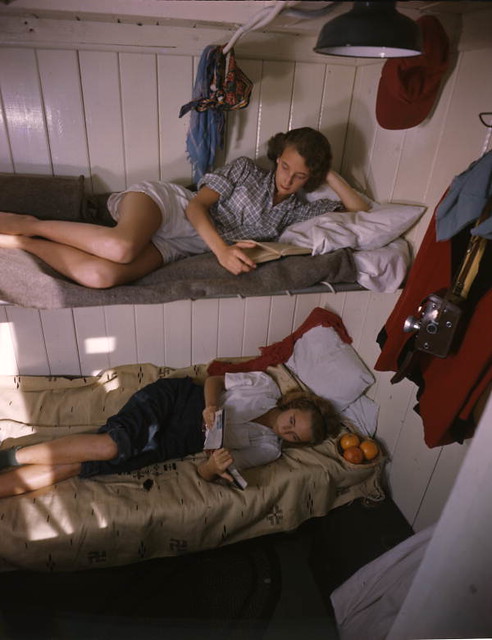
Q: Going to a late-night movie with a group of friends & then sitting outside at an In-n-Out eating burgers at midnight is AMAZING. How can that "drain" you?
 |
| © 1947 Florida Memory, Flickr | PD | via Wylio |
In all seriousness, though, you're assuming that amazing things can't be draining. We just hit our "too much of a good thing" meter much more quickly than you do.
One of the things I've tried to communicate to my extrovert friends (not always successfully) is that I do like to spend time with them. I do. I just run out of air more quickly than they do. And if you try to pressure me to stick around when I'm out of air, I'm not going to suddenly start having fun again. I'm going to get more and more unhappy because I can't breathe, guys, and you're not going to enjoy my company and I'm not going to enjoy your company. So the best method is for me to go home, breathe in my own room for awhile, and then be ready to hang with you again sometime soon -- which I'm much more likely to do if I know that you're comfortable with me leaving whenever I need to!
Those are the main questions from extroverts I wanted to answer. Extroverts, do you have any more? Introverts, do you have your own answers to these questions? Share in the comments!
Wednesday, March 25, 2015
Introverts Are Not Fragile
As the whole "introverts are better than extroverts" trend (which I do not support) starts to die down, there comes another trend that I do not support, and that is the idea that introverts are fragile, sensitive creatures who are about to break any moment.
Guys, some of the introverts I know have spent every moment of their waking lives acting like they were somebody else just because that's what they thought they were supposed to do. That doesn't sound all that fragile to me.
Introverts don't have to suck at being social.
Introverts don't have to curl up in a little ball every time someone talks to them.
Introverts don't always have panic attacks when they're invited to a party and sweat bullets until they cancel at the last minute.
If they do, that's not the introversion doing that. That's social anxiety or depression or something else that may be mimicking some of the outward signs of introversion... but if you're spending your life miserable at the sight of others, that's not introversion, that's something else.
Introversion may be uncomfortable and awkward in a culture centered around extroverts, but it shouldn't be painful or traumatizing.
I worry sometimes that extroverts see these posts and start to see us as fragile, overly sensitive little flowers who might wither and die if we look at us wrong. And oh my gosh, that's not true. Or it shouldn't be.
When I post about how to treat introverted friends, it's not because I'm begging you to handle my introversion carefully. I'm not going to fall apart if you don't act that way around me. My roommates didn't scar me for life when they invited friends over without telling me, even if it happened a lot. I'd sometimes get annoyed or leave the room if I want to focus on something, but ultimately I'd deal with it because I'm an adult and that's what you do.
When I post about the differences between extroverts and introverts, I'm not saying, "Please be careful with us." I'm saying, "We live in a culture where a lot of us feel unheard, unseen, and unappreciated. If you want to go that extra mile and make us feel valued, here are some tips."
Worst of all, I don't want extroverts to read these and think, "Apparently I exhaust them too much. Better leave them alone." No! I love my extroverted friends -- they support me, they encourage me, they make me feel like they value my time because they're excited to see me. Introverts and extroverts can and should coexist. Are extroverts exhausting? Sure, they are. But we can handle it, especially if we come to value you as a friend. And will I need some time alone sometimes? Sure, I will. And you can handle that, especially if you value me as a friend.
Let's not let the voice of the introvert become either a triumphant cry of superiority or a quiet whimper of fear. Let's simply be who we are, be strong and joyful in who we are, and use that inner strength to love the people around us -- whatever that looks like for us.
Guys, some of the introverts I know have spent every moment of their waking lives acting like they were somebody else just because that's what they thought they were supposed to do. That doesn't sound all that fragile to me.
 |
| © 2013 Loren Kerns, Flickr | CC-BY | via Wylio |
Introverts don't have to curl up in a little ball every time someone talks to them.
Introverts don't always have panic attacks when they're invited to a party and sweat bullets until they cancel at the last minute.
If they do, that's not the introversion doing that. That's social anxiety or depression or something else that may be mimicking some of the outward signs of introversion... but if you're spending your life miserable at the sight of others, that's not introversion, that's something else.
Introversion may be uncomfortable and awkward in a culture centered around extroverts, but it shouldn't be painful or traumatizing.
I worry sometimes that extroverts see these posts and start to see us as fragile, overly sensitive little flowers who might wither and die if we look at us wrong. And oh my gosh, that's not true. Or it shouldn't be.
 |
| © 2008 Corey Balazowich, Flickr | CC-BY-ND | via Wylio |
When I post about the differences between extroverts and introverts, I'm not saying, "Please be careful with us." I'm saying, "We live in a culture where a lot of us feel unheard, unseen, and unappreciated. If you want to go that extra mile and make us feel valued, here are some tips."
Worst of all, I don't want extroverts to read these and think, "Apparently I exhaust them too much. Better leave them alone." No! I love my extroverted friends -- they support me, they encourage me, they make me feel like they value my time because they're excited to see me. Introverts and extroverts can and should coexist. Are extroverts exhausting? Sure, they are. But we can handle it, especially if we come to value you as a friend. And will I need some time alone sometimes? Sure, I will. And you can handle that, especially if you value me as a friend.
Let's not let the voice of the introvert become either a triumphant cry of superiority or a quiet whimper of fear. Let's simply be who we are, be strong and joyful in who we are, and use that inner strength to love the people around us -- whatever that looks like for us.
Wednesday, December 17, 2014
Networking Tips for Introverts
From my ask.fm profile:
Do you have any tips for professional networking as an awkward introvert?
Well... let me start off by saying that I haven't had a lot of opportunities to practice this, thanks to a lot of working from home or nonsocial jobs. So I'm not particularly good at it. But I would like to address this, so what I've done here is done a little Internet research, found other similar articles, discovered advice I would give myself, and presented it here for you with my own spin on it. So I can't necessarily verify that this works all the time, but a lot of these principles apply to social interaction in general, so they should transfer fairly well to the workplace.
1. Schedule prep time and downtime at any networking events.
Yup, this sounds about right. I know I'm no good to anybody when I'm overpeopled or stressed, so just like I would for any other big social event, I need to plan for some quiet time, whether that means mapping out time before and after to veg or planning strategic trips to the bathroom to hide throughout.
You can also determine beforehand how long you're going to stay. If things go well, you can extend that time, but I'd suggest that you commit to staying at least 20-30 minutes. Often the first few minutes are the most uncomfortable, and if you leave 30 minutes in, that gives you time to meet one new person or have a conversation with an acquaintance. Measuring it in goals is good too. Sometimes I've gone to social events where I tell myself I can leave as soon as I've had at least five brief conversations with new people. That way, I push myself to accomplish my goals and don't risk standing in the back talking to no one for 30 minutes and then giving up.
2. Start small.
I've found that a lot of introverts have a tendency to be all-or-nothing at work. Either you never talk to anyone ever and are the hermit in the corner, or you go out of your way to talk and chat with everyone because you feel you should, and you come home more stressed than ever. I read an article recently that those who typically go out to eat for lunch should consider spending one or two lunch breaks a week in the workplace for networking purposes with your co-workers. This is an attainable goal. It could be awkward or uncomfortable at first, but it's not impossible, and it strikes a workable balance between hermit and social butterfly.
3. Have some conversation starters in your back pocket.
This is good social advice in general. For those of us who dislike small talk, we may not practice it enough to actually, you know, be okay at it. So keep an eye out for some good icebreakers, and keep the ones that work with you. This site suggests "What is your favorite part of your job?" which is a great one for introverts -- it's not just communicating mindless or uninteresting facts. It's a question that will actually reveal the personality and passions of the person you're talking to.
4. Take advantage of your strengths.
Introverts may not like mingling, but once they get into conversations, they can come across very different than they feel -- particularly because introverts are often very good listeners. Take advantage of that! If you can get someone talking about themselves, you can just sit back, listen, display interest, and occasionally ask questions, and while you may feel like you didn't do anything, the person you're talking to may leave thinking positively of you because your attentive listening felt so validating. Of course, if the other person isn't talking much, share some personal stories of your own -- you don't want it to feel like you're interrogating them for information -- but you'll be surprised how often you can just get the ball rolling and then pay attention to it while it does all the hard work.
While for some of us (including me) it can feel awkward or difficult to mix professional situations with social situations, it can definitely work to your advantage. So it's worth it for us to practice these skills and become so awesome at them that nobody else even knows we're uncomfortable. Magic!
Do you have any tips for professional networking as an awkward introvert?
Well... let me start off by saying that I haven't had a lot of opportunities to practice this, thanks to a lot of working from home or nonsocial jobs. So I'm not particularly good at it. But I would like to address this, so what I've done here is done a little Internet research, found other similar articles, discovered advice I would give myself, and presented it here for you with my own spin on it. So I can't necessarily verify that this works all the time, but a lot of these principles apply to social interaction in general, so they should transfer fairly well to the workplace.
 |
| © 2012 Niki Odolphie, Flickr | CC-BY | via Wylio |
Yup, this sounds about right. I know I'm no good to anybody when I'm overpeopled or stressed, so just like I would for any other big social event, I need to plan for some quiet time, whether that means mapping out time before and after to veg or planning strategic trips to the bathroom to hide throughout.
You can also determine beforehand how long you're going to stay. If things go well, you can extend that time, but I'd suggest that you commit to staying at least 20-30 minutes. Often the first few minutes are the most uncomfortable, and if you leave 30 minutes in, that gives you time to meet one new person or have a conversation with an acquaintance. Measuring it in goals is good too. Sometimes I've gone to social events where I tell myself I can leave as soon as I've had at least five brief conversations with new people. That way, I push myself to accomplish my goals and don't risk standing in the back talking to no one for 30 minutes and then giving up.
2. Start small.
I've found that a lot of introverts have a tendency to be all-or-nothing at work. Either you never talk to anyone ever and are the hermit in the corner, or you go out of your way to talk and chat with everyone because you feel you should, and you come home more stressed than ever. I read an article recently that those who typically go out to eat for lunch should consider spending one or two lunch breaks a week in the workplace for networking purposes with your co-workers. This is an attainable goal. It could be awkward or uncomfortable at first, but it's not impossible, and it strikes a workable balance between hermit and social butterfly.
3. Have some conversation starters in your back pocket.
This is good social advice in general. For those of us who dislike small talk, we may not practice it enough to actually, you know, be okay at it. So keep an eye out for some good icebreakers, and keep the ones that work with you. This site suggests "What is your favorite part of your job?" which is a great one for introverts -- it's not just communicating mindless or uninteresting facts. It's a question that will actually reveal the personality and passions of the person you're talking to.
|
| © 2011 worldwaterweek, Flickr | CC-BY | via Wylio |
Introverts may not like mingling, but once they get into conversations, they can come across very different than they feel -- particularly because introverts are often very good listeners. Take advantage of that! If you can get someone talking about themselves, you can just sit back, listen, display interest, and occasionally ask questions, and while you may feel like you didn't do anything, the person you're talking to may leave thinking positively of you because your attentive listening felt so validating. Of course, if the other person isn't talking much, share some personal stories of your own -- you don't want it to feel like you're interrogating them for information -- but you'll be surprised how often you can just get the ball rolling and then pay attention to it while it does all the hard work.
While for some of us (including me) it can feel awkward or difficult to mix professional situations with social situations, it can definitely work to your advantage. So it's worth it for us to practice these skills and become so awesome at them that nobody else even knows we're uncomfortable. Magic!
Monday, September 29, 2014
When Your Extroverted Friends Just Don't Get It
I've been poking around a few introversion-related online forums lately, and one question that seems to come up all the time is, "What do I do when the extroverts in my life just don't understand that I need to be alone?"
An introverted man was told by his extroverted wife (whenever she wanted to go out and he didn't), "We don't just get to do what we want all the time." A college introvert found they kept losing friends because their social group got tired of the introvert only going out with them about half the times they asked. An introvert living at home offended his mom when he tried to explain that he needed time alone and went to his room whenever they had company.
This kind of thing happens a lot.
It's starting to change, I think, as introversion has made its way to the forefront and people are starting to realize not everyone needs to be excited to be with people all the time. But this still happens.
So I thought I'd share a few of the things that have helped me make peace with my extroverted friends.
1. Explain to them up front that you're an introvert.
One of the reasons it was easier for me to get out of socializing in college when I was overwhelmed was that I was pretty straightforward with all my friends that I needed time alone. This way, when everyone went out to lunch and then wanted to go bowling or something after, it wasn't a sudden surprise when I said, "No, thanks, I'm just going to head back to my room and chill." Sometimes there's an assumption that if you're friends, you'll do everything together all the time, and letting them know right from the start that I wasn't going to do that meant fewer unmet expectations.
2. Be generous with your time when you can.
Whenever introverts and extroverts are friends, then there's going to have to be some give and take on both sides. The introvert will sometimes feel like they'd rather be alone, and the extrovert will sometimes feel like the introvert is abandoning them. If your extroverted friend is willing to give you alone time, then make sure you show that appreciation by being willing to go out with them sometimes when you don't really feel like it. Not all the time -- don't burn yourself out trying to prove you're a good friend -- but sometimes introverts get weirdly militant and start proclaiming that they're never going to do anything social again if they don't want to. And that's just kind of silly.
3. Stick to your boundaries.
One of the ideas that I've found to be common in extroverts who don't get it is that we're all just shy and want to be coaxed out of our shells, that we all secretly want to hang out all the time. If you say no to your extroverted friends but then give in when they pressure you, you're just reinforcing that. If you decide you're not going out and you really don't want to, stick with that. Of course, if you realize as they talk that you kind of want to go out after all, then you can do that. But if you'd really rather be alone, then don't give in. It may puzzle them for awhile when you genuinely choose to be by yourself instead of with other people, but they'll get used to it eventually.
4. Enjoy being introverted.
This is connected to the above thought. Most of the extroverts who push me to hang out with them are doing so out of concern for me. (Not all of them, but that's another story.) They genuinely don't think I'm having fun on my own. But I've found that introverts really love being alone -- definitely including me! There's something so beautiful about sitting by myself in absolute silence reading a book, or going to see a movie and being the only one in my row, or taking a solitary walk with just my iPod and good earbuds. That's why I write blogs like this one that talk about how much I really adore being by myself. Sometimes introverts don't talk about these things because they think it'll make them seem weird, and maybe it will, but it'll also help people see that you're not sad and lonely every time you're by yourself... so they won't feel quite as strong a need to combat it.
These are just a few of the things I've tried. What else has worked for you guys? Extroverted friends, do you have any "aha" moments to share? Chime in in the comments, and share if you liked the blog!
An introverted man was told by his extroverted wife (whenever she wanted to go out and he didn't), "We don't just get to do what we want all the time." A college introvert found they kept losing friends because their social group got tired of the introvert only going out with them about half the times they asked. An introvert living at home offended his mom when he tried to explain that he needed time alone and went to his room whenever they had company.
This kind of thing happens a lot.
It's starting to change, I think, as introversion has made its way to the forefront and people are starting to realize not everyone needs to be excited to be with people all the time. But this still happens.
So I thought I'd share a few of the things that have helped me make peace with my extroverted friends.
 |
| © 2013 Tiago, Flickr | CC-BY | via Wylio |
1. Explain to them up front that you're an introvert.
One of the reasons it was easier for me to get out of socializing in college when I was overwhelmed was that I was pretty straightforward with all my friends that I needed time alone. This way, when everyone went out to lunch and then wanted to go bowling or something after, it wasn't a sudden surprise when I said, "No, thanks, I'm just going to head back to my room and chill." Sometimes there's an assumption that if you're friends, you'll do everything together all the time, and letting them know right from the start that I wasn't going to do that meant fewer unmet expectations.
2. Be generous with your time when you can.
Whenever introverts and extroverts are friends, then there's going to have to be some give and take on both sides. The introvert will sometimes feel like they'd rather be alone, and the extrovert will sometimes feel like the introvert is abandoning them. If your extroverted friend is willing to give you alone time, then make sure you show that appreciation by being willing to go out with them sometimes when you don't really feel like it. Not all the time -- don't burn yourself out trying to prove you're a good friend -- but sometimes introverts get weirdly militant and start proclaiming that they're never going to do anything social again if they don't want to. And that's just kind of silly.
3. Stick to your boundaries.
One of the ideas that I've found to be common in extroverts who don't get it is that we're all just shy and want to be coaxed out of our shells, that we all secretly want to hang out all the time. If you say no to your extroverted friends but then give in when they pressure you, you're just reinforcing that. If you decide you're not going out and you really don't want to, stick with that. Of course, if you realize as they talk that you kind of want to go out after all, then you can do that. But if you'd really rather be alone, then don't give in. It may puzzle them for awhile when you genuinely choose to be by yourself instead of with other people, but they'll get used to it eventually.
 |
| © 2008 Thai Jasmine (Smile..smile...Smile..), Flickr | CC-BY | via Wylio |
This is connected to the above thought. Most of the extroverts who push me to hang out with them are doing so out of concern for me. (Not all of them, but that's another story.) They genuinely don't think I'm having fun on my own. But I've found that introverts really love being alone -- definitely including me! There's something so beautiful about sitting by myself in absolute silence reading a book, or going to see a movie and being the only one in my row, or taking a solitary walk with just my iPod and good earbuds. That's why I write blogs like this one that talk about how much I really adore being by myself. Sometimes introverts don't talk about these things because they think it'll make them seem weird, and maybe it will, but it'll also help people see that you're not sad and lonely every time you're by yourself... so they won't feel quite as strong a need to combat it.
These are just a few of the things I've tried. What else has worked for you guys? Extroverted friends, do you have any "aha" moments to share? Chime in in the comments, and share if you liked the blog!
Wednesday, June 11, 2014
Tips for Traveling Introverts
I love traveling. I just came back from a two-week road trip. I spent a year traveling around the country doing drama at churches. I've trekked enough across the U.S. that now, the only two states I haven't visited are Alaska and Hawaii.
But traveling can be extremely draining for an introvert.
I am definitely on the "oh so very introverted" end of the continuum, so as much as I love going around and visiting new places, it's easy for me to get tired out quickly. Here are a few of the tips I've learned over the years about how to travel and stay sane as an introvert.
1. Choose your traveling companions wisely.
Traveling with just one or two people is easier for introverts than with a large group, so as much as you think you might love having a huge road trip with seven or eight good friends, it'll get overwhelming much more quickly than if you just bring along a couple. Also, traveling with people you don't know well can be tough. It's hard to relax when you're constantly around acquaintances rather than good friends. If you're the one planning a trip, plan your companions carefully. You don't want to burn out halfway through because you're surrounded by too many people. And don't discount the idea of traveling by yourself, either. I've done that before and it's super fun and flexible and if you want to make friends along the way, you can, and if you don't, you don't have to.
2. Budget extra money for introvert escapes.
Specifically, I'm talking hotels. A lot of the times when I've traveled, we've saved traveling money by crashing with friends around the country. It's definitely cheaper (you can usually get a meal or two and a place to stay out of that), and it is awesome to visit with old friends, but it can also be exhausting spending time with someone new every single night. For me, a safe ratio is spending one out of every 3-4 nights in a hotel. It gives you a chance to recuperate so that you'll be ready to socialize again the next day. (If you like camping, that's a cheaper way to get some social recovery time. I hate camping so that's not really an option for me, hehe.)
3. Don't plan too many outings -- or be ready to drop out.
There's a tendency to want to do and see everything when you're spending time in a city, but don't overextend yourself. I frequently find that after a few hours of sightseeing, I'm done for the day. Sometimes I have extra energy and can do more things, but sometimes that's all I've got in me. This means you should avoid buying multiple tickets ahead of time, thus committing yourself to spending a full day doing tourist activities. I generally try to set in stone no more than one thing per day -- with other flexible activities that I can join or not join as I wish. Keep your schedule as flexible as possible to accommodate your social energy, and you'll be able to really enjoy all the things you do choose to participate in.
4. Feel free to go do things on your own.
You really don't have to sightsee as a group. If your whole group is hanging out for the day in a city (especially if it has good public transportation), you can always get some quiet time by saying, "Hey, I'm going to go check out this museum and then do some shopping, but I'll meet up with you guys for dinner." That is perfectly OK. If you're somewhere that doesn't have public transport, you can always look up a cool place en route to where they're going to be spending their time and request that they drop you off and pick you up there. This lets you be touristy while still enjoying some introversion time.
5. Take advantage of the travel time itself.
You can get some great to-yourself time in a car, a plane, or a bus. Just have an MP3 player ready with your favorite music and a Kindle ready with some good books, and you can spend the whole travel time charging your solitude meter. Then when you arrive at your destination, you're full of energy and ready to go have some fun.
What do you guys think? Any other good introvert traveling tips? What is your favorite travel destination?
But traveling can be extremely draining for an introvert.
I am definitely on the "oh so very introverted" end of the continuum, so as much as I love going around and visiting new places, it's easy for me to get tired out quickly. Here are a few of the tips I've learned over the years about how to travel and stay sane as an introvert.
1. Choose your traveling companions wisely.
Traveling with just one or two people is easier for introverts than with a large group, so as much as you think you might love having a huge road trip with seven or eight good friends, it'll get overwhelming much more quickly than if you just bring along a couple. Also, traveling with people you don't know well can be tough. It's hard to relax when you're constantly around acquaintances rather than good friends. If you're the one planning a trip, plan your companions carefully. You don't want to burn out halfway through because you're surrounded by too many people. And don't discount the idea of traveling by yourself, either. I've done that before and it's super fun and flexible and if you want to make friends along the way, you can, and if you don't, you don't have to.
2. Budget extra money for introvert escapes.
Specifically, I'm talking hotels. A lot of the times when I've traveled, we've saved traveling money by crashing with friends around the country. It's definitely cheaper (you can usually get a meal or two and a place to stay out of that), and it is awesome to visit with old friends, but it can also be exhausting spending time with someone new every single night. For me, a safe ratio is spending one out of every 3-4 nights in a hotel. It gives you a chance to recuperate so that you'll be ready to socialize again the next day. (If you like camping, that's a cheaper way to get some social recovery time. I hate camping so that's not really an option for me, hehe.)
3. Don't plan too many outings -- or be ready to drop out.
There's a tendency to want to do and see everything when you're spending time in a city, but don't overextend yourself. I frequently find that after a few hours of sightseeing, I'm done for the day. Sometimes I have extra energy and can do more things, but sometimes that's all I've got in me. This means you should avoid buying multiple tickets ahead of time, thus committing yourself to spending a full day doing tourist activities. I generally try to set in stone no more than one thing per day -- with other flexible activities that I can join or not join as I wish. Keep your schedule as flexible as possible to accommodate your social energy, and you'll be able to really enjoy all the things you do choose to participate in.
4. Feel free to go do things on your own.
You really don't have to sightsee as a group. If your whole group is hanging out for the day in a city (especially if it has good public transportation), you can always get some quiet time by saying, "Hey, I'm going to go check out this museum and then do some shopping, but I'll meet up with you guys for dinner." That is perfectly OK. If you're somewhere that doesn't have public transport, you can always look up a cool place en route to where they're going to be spending their time and request that they drop you off and pick you up there. This lets you be touristy while still enjoying some introversion time.
5. Take advantage of the travel time itself.
You can get some great to-yourself time in a car, a plane, or a bus. Just have an MP3 player ready with your favorite music and a Kindle ready with some good books, and you can spend the whole travel time charging your solitude meter. Then when you arrive at your destination, you're full of energy and ready to go have some fun.
What do you guys think? Any other good introvert traveling tips? What is your favorite travel destination?
Monday, April 28, 2014
How to Find Other Introverts
While browsing an introversion-related subreddit the other day, I found a post by someone who was frustrated that they couldn't seem to find any people who were introverted to be friends with. Everyone they met liked to go out and party all the time, and they just wanted a friend who preferred to sit in drinking coffee and reading a book on Friday nights.
I completely sympathize. It can be hard for introverts to meet other introverts, much less to recognize them as such, and when it seems like everyone you meet likes to do big social extroverted things all the time, it can feel very lonely.
So I figured I'd offer up some suggestions to the introvert world at large.
1. Remember, not all introverts look like introverts.
Some introverts may enjoy big social gatherings in small doses, or they learn to fake it. Not every introvert spends all their time in public staring at their phone or reading a book. You may be meeting introverts all the time and you just don't know it. To find an introvert in a crowd, try striking up one-on-one conversations -- an introvert is more likely to direct all their attention to one person for a long period of time, while someone more extroverted will probably still love talking to you but will include others in the conversation or move on to mingle with someone else.
Facebook has actually been the most helpful tool for me. Posting about introversion and about how much I love getting alone time after a socially busy week has opened up the floor for others to chime in with, "Me too!" and "I know what you mean!" There are friends I honestly had no idea were introverts until they responded to one of these posts.
2. Look for the outliers.
While not all shy people are introverts and not all boisterous people are extroverts, those traits do often go together. Keep an eye out for the people in your circle of acquaintances who seem to distance themselves a little bit from groups -- the ones who usually eat alone in the cafeteria, the ones who leave the party early, the ones who only occasionally goes to the movies with everyone.
3. Pursue introvert-friendly hobbies (socially).
This is essentially saying that if you want to find somebody who hates hanging out at parties like you do, you're probably not going to find them at a party. If most of your social activities are you being dragged along reluctantly to places you don't want to be, you're going to be in the minority. Find something you enjoy that may be a little bit more introverted and see if there's a way to expand that to be a little bit social. Join a book club, take a cooking class, find a Facebook group for local movie enthusiasts. This way, even if the people you meet aren't super introverted, you know that you at least share some common interests, and if you say, "I don't feel like going out. Let's just Redbox a movie and hang out at my place," you know this is something they might enjoy.
Any thoughts from you guys? What are your tips and ideas on where to find and connect with introverts?
I completely sympathize. It can be hard for introverts to meet other introverts, much less to recognize them as such, and when it seems like everyone you meet likes to do big social extroverted things all the time, it can feel very lonely.
So I figured I'd offer up some suggestions to the introvert world at large.
1. Remember, not all introverts look like introverts.
Some introverts may enjoy big social gatherings in small doses, or they learn to fake it. Not every introvert spends all their time in public staring at their phone or reading a book. You may be meeting introverts all the time and you just don't know it. To find an introvert in a crowd, try striking up one-on-one conversations -- an introvert is more likely to direct all their attention to one person for a long period of time, while someone more extroverted will probably still love talking to you but will include others in the conversation or move on to mingle with someone else.
Facebook has actually been the most helpful tool for me. Posting about introversion and about how much I love getting alone time after a socially busy week has opened up the floor for others to chime in with, "Me too!" and "I know what you mean!" There are friends I honestly had no idea were introverts until they responded to one of these posts.
2. Look for the outliers.
While not all shy people are introverts and not all boisterous people are extroverts, those traits do often go together. Keep an eye out for the people in your circle of acquaintances who seem to distance themselves a little bit from groups -- the ones who usually eat alone in the cafeteria, the ones who leave the party early, the ones who only occasionally goes to the movies with everyone.
3. Pursue introvert-friendly hobbies (socially).
This is essentially saying that if you want to find somebody who hates hanging out at parties like you do, you're probably not going to find them at a party. If most of your social activities are you being dragged along reluctantly to places you don't want to be, you're going to be in the minority. Find something you enjoy that may be a little bit more introverted and see if there's a way to expand that to be a little bit social. Join a book club, take a cooking class, find a Facebook group for local movie enthusiasts. This way, even if the people you meet aren't super introverted, you know that you at least share some common interests, and if you say, "I don't feel like going out. Let's just Redbox a movie and hang out at my place," you know this is something they might enjoy.
Any thoughts from you guys? What are your tips and ideas on where to find and connect with introverts?
Monday, April 7, 2014
Do Extroverts Feel Pressured to Speak? (And Other Questions For My Extrovert Friends)
In the midst of all these articles about "things introverts have to deal with," someone pulled together a similar article about extroverts, and one part in particular caught my eye:
This led to a few other thoughts which I kept hoping would solidify into a coherent theme, but it really hasn't yet, so here they are in no order at all.
When there’s a lull in the conversation, do you know who starts it back up again? The extrovert does. However, being the engine and the fuel for social gatherings can be extremely tiring and feel like a lot of work, so sometimes it would be nice for us extroverts to be allowed a break and have other people take over (though, for some of us, not talking can be quite the challenge).The first time I read this article, it was actually from a blog by an introvert who was responding to the article, and they had basically the same response I did: Do we need to keep the conversation going?
This led to a few other thoughts which I kept hoping would solidify into a coherent theme, but it really hasn't yet, so here they are in no order at all.
- I know for me, as an introvert, I feel definite pressure to keep most conversations going, but that's because I assume I'm talking to someone more extroverted than I am (because everyone is more extroverted than I am). But I really would be just as happy not talking if I have nothing to say. The pressure I feel to keep up the conversation is entirely external -- I assume other people want me to keep talking, so I try. When extroverts feel pressure to talk, is it mostly external or internal? Do they feel like they should talk because they think I want conversation, or do they feel like they should talk because they want conversation? Or a little of both? Because, hey, I'm totally fine with occasional silence if you are.
- When I spend time with introverted friends, it's quite common for us, after the initial burst of conversation, to spend much of our time together in the same room but doing individual things, laptops open or books in hand, with the opportunity to lapse back into conversation as it arises. Does this count as social interaction for extroverts? Or does their interaction need to be more driven/active? How necessary is conversation to the feeling of having spent time with someone?
 |
| (I was hoping I could find a picture of me and a friend on computers together, but this is the closest I found. Anyway, I'M socializing while on the computer here... I'm not sure what Jacob is doing. Posing? Stretching?) |
- Which is more socially fulfilling for an extrovert: constant conversation with someone about something you don't really care about (because, watch out, you get some of us introverts talking about something we love and we can go on for hours) or scattered moments of conversation you're interested in interspersed with long silences? I would always choose the latter, but are extroverts more likely to find that uninterrupted social interaction is worth it, no matter the subject?
I am kind of fascinated by this and would really love any of my friends who consider themselves more on the extroverted side of things to chime in with any thoughts of their own. Introverted friends, feel free to ask the extroverts in your life and report back to me on what they say. I'd like to post a follow-up blog next week with some of the comments.
I am so far on the introverted side of things that sometimes I'm reminded that I really have very little concept of what it's like to see things from the other side. I'm sure it varies from person to person, but I'd love to get some feedback.
Monday, January 27, 2014
When Introverts Get Lonely
Every once in awhile I'll mention something about being lonely or wanting to be with people and get a dubious response from whoever I'm talking with, as if an introvert could never be lonely, because isn't the whole idea that introverts don't want to be with people? Of course, that's not the case. Introverts like their alone time, but they value time spent with people they care about as well, and when they go awhile without it, they get lonely just like extroverts do. It may take a little bit longer for the joy of solitude to wear off for us, but it happens.
The problem is that, sometimes, we spend so much time seeking solitude during our busy overpeopled times that we end up accidentally isolated when we need people time.
That's been a huge adjustment for me the past few months. I spent the first 26 years of my life looking for ways to get away and have a break from people. I went from living with my family of ten to traveling in the drama company to college to living with four roommates in a tiny trailer to living with my family again. Then, suddenly, I found myself in a situation where, even though I am living with someone, I'm completely alone for a good 8-10 hours every day. I work from home and don't have a vehicle of my own, so while my husband is at work, I'm by myself.
For the first four months, I was like, "WOOHOO LOOK AT ALL THIS ME TIME I GET!" And it was wonderful. But then we went to Illinois to visit my family for Thanksgiving and I came back home with a profound sense of aloneness, and not in a positive way. I was suddenly struck by the fact that I no longer always had someone around to hang out with if I wanted to, and I began craving more human interaction.
Turns out when you're not constantly in a situation where you have to socialize with people, it's easy to withdraw until you've withdrawn yourself all the way out into hermitiness.
Whoops.
Still working on how to fix this for myself in my current situation. With no outside job and no vehicle, it's hard to do things like finding activities to get involved in. These are a few of the things I'm trying to see if I can regularly recharge my social meter:
1. Take advantage of any social opportunities that DO come along.
There's at least a part of me that will always go, "Ugh," to being a part of any social gathering, just out of habit. I'm getting better at reminding myself that, no, I want to do this. And then my brain goes, "Oh, yeah! This will probably be fun and good for me right now!" and I can cheerfully go off to church or a planned event or, heck, even a trip to the grocery store where people might be. (Just as even being in the same room as others can drain me when I'm overpeopled, being in the same room with others can recharge me a little bit when I need it.)
2. Reconnect with friends via the Internet.
I used to be big on texting and chatting with my long-distance friends, and I've lost some of that. A lot of us are really-for-real-now in the adult world, married, with kids, with jobs, with responsibilities, and it's easy to lose track of far-away friends in the shuffle. I've been trying to deliberately reach out to some old friends and reconnect with them, even if it's just a text or a Facebook message saying I'm thinking of them.
3. Look for meaningful conversations.
I can keep myself socially afloat by exchanging pleasantries with grocery store cashiers and people at church, but it's not satisfying. It's like keeping yourself alive by eating cotton candy when, really, what you need is an actual meal. Sometimes a single thoughtful, meaningful, significant conversation, even if it's with someone I barely know, can be enough to keep me going socially for weeks. I have been working to seek out these conversations and make the most of them.
How about you guys - especially my introvert friends? How do you deal with loneliness?
The problem is that, sometimes, we spend so much time seeking solitude during our busy overpeopled times that we end up accidentally isolated when we need people time.
That's been a huge adjustment for me the past few months. I spent the first 26 years of my life looking for ways to get away and have a break from people. I went from living with my family of ten to traveling in the drama company to college to living with four roommates in a tiny trailer to living with my family again. Then, suddenly, I found myself in a situation where, even though I am living with someone, I'm completely alone for a good 8-10 hours every day. I work from home and don't have a vehicle of my own, so while my husband is at work, I'm by myself.
For the first four months, I was like, "WOOHOO LOOK AT ALL THIS ME TIME I GET!" And it was wonderful. But then we went to Illinois to visit my family for Thanksgiving and I came back home with a profound sense of aloneness, and not in a positive way. I was suddenly struck by the fact that I no longer always had someone around to hang out with if I wanted to, and I began craving more human interaction.
Turns out when you're not constantly in a situation where you have to socialize with people, it's easy to withdraw until you've withdrawn yourself all the way out into hermitiness.
Whoops.
Still working on how to fix this for myself in my current situation. With no outside job and no vehicle, it's hard to do things like finding activities to get involved in. These are a few of the things I'm trying to see if I can regularly recharge my social meter:
1. Take advantage of any social opportunities that DO come along.
There's at least a part of me that will always go, "Ugh," to being a part of any social gathering, just out of habit. I'm getting better at reminding myself that, no, I want to do this. And then my brain goes, "Oh, yeah! This will probably be fun and good for me right now!" and I can cheerfully go off to church or a planned event or, heck, even a trip to the grocery store where people might be. (Just as even being in the same room as others can drain me when I'm overpeopled, being in the same room with others can recharge me a little bit when I need it.)
2. Reconnect with friends via the Internet.
I used to be big on texting and chatting with my long-distance friends, and I've lost some of that. A lot of us are really-for-real-now in the adult world, married, with kids, with jobs, with responsibilities, and it's easy to lose track of far-away friends in the shuffle. I've been trying to deliberately reach out to some old friends and reconnect with them, even if it's just a text or a Facebook message saying I'm thinking of them.
3. Look for meaningful conversations.
I can keep myself socially afloat by exchanging pleasantries with grocery store cashiers and people at church, but it's not satisfying. It's like keeping yourself alive by eating cotton candy when, really, what you need is an actual meal. Sometimes a single thoughtful, meaningful, significant conversation, even if it's with someone I barely know, can be enough to keep me going socially for weeks. I have been working to seek out these conversations and make the most of them.
How about you guys - especially my introvert friends? How do you deal with loneliness?
Monday, January 13, 2014
So Introverts Have People's Attention. Now What?
Quick meta update: I've mentioned this on Facebook but not on my blog and wanted to make it available to blog readers. If you want to follow along with my adventures to watch a movie every weekday this year, most of which are chosen by my friends, not me, you can join my Facebook group at this link. I kick off the challenge today with my viewing of Crazy Heart, so come, join, and chat about movies with me.
I haven't written a lot about introversion on here in awhile, mostly because... I haven't really felt a need to. I haven't encountered a lot of crazy extrovert bias (at least not enough to make me go, "Oh, this is a cultural thing I should respond to!") and in the last few months especially, there have been plenty of introvert-related things popping up all over the Internet. So, as an introvert, I felt pretty comfortable sitting back and letting other people say things. The last time I wrote something about introversion was last September, and that was a response to an extrovert who was mad that people were talking about introversion too much. Heh.
Obviously introverts are getting the word out. In all this, I see lots of introverts embracing and proclaiming their own love for solitude, claiming the label "introvert" without assigning it a negative connotation, and cheerfully announcing they'd rather stay at home than go to a New Year's Eve party, and it's OK.
It's not like we've won the battle and there will never be bias again or anything, but I would say the "raise awareness" part of our little unofficial campaign is going quite well.
So... now what do we do?
Well, here are some thoughts to keep in mind as we watch the tide change on this issue.
1. Let's start assuming people know what we're talking about. Until recently, I did still have to explain everywhere I went that introversion and shyness aren't the same. This is passing into common knowledge at a very speedy rate, so let's react to it appropriately. Since some of these introvert-centered memes end up portraying us as pretentious elitists, so let's avoid that by not talking down to people. If you're talking about introversion/extroversion with someone, start with the assumption that they know the basics of what it's all about. If they don't, you can tell them. But by assuming at first that they probably have noticed what's been all over the Internet, you can keep yourself from sounding condescending and playing into these new negative introvert stereotypes of "we think we're better than you."
2. Let's remember why we love our extrovert friends. Some of these memes paint extroverts as horrible soul-sucking monsters, and while some of them may be, so are some introverts. :-) That last introversion post I wrote was in response to someone who was clearly upset about being painted with that anti-extroversion brush, and after I finished my panic attack about her apparent anger toward me just for being an introvert, I was able to breathe and realize that it probably wasn't any more pleasant for her to find herself targeted just for her extroversion. Extroverts aren't the enemy. Jerks and misunderstandings are the enemy. We're working toward the goal of "being kind people and making everyone feel like they're worth something."
3. Let's not get smug and superior. In all our attempts to affirm our own self-worth, it's easy to flip that around and be like, "Well, we're misunderstood because we're actually better than everyone else simply by being introverts," and that's just nonsense. Related to the above two points, being jerks to extroverts helps our case not at all. None of this "we are the deep ones," "we are the smart ones," "we are the better friends." We are not perfect, special, magical beings. We are flawed, often annoying humans who happen to like being alone a lot, so we're not any better off than the flawed, often annoying humans who happen to like being with people a lot.
4. Let's just enjoy being introverts. Really, amid all the talking and blogging and such, the most beneficial thing for everyone is for us just to happily be our introverted selves - no apologies, no regrets, no shame or guilt. Most people get used to it. And with the sudden explosion of introvert memes, it's easier than ever to tell someone, "Oh, thanks for inviting me but, but I think I'll just stay home tonight," and they get it. So enjoy that!
I haven't written a lot about introversion on here in awhile, mostly because... I haven't really felt a need to. I haven't encountered a lot of crazy extrovert bias (at least not enough to make me go, "Oh, this is a cultural thing I should respond to!") and in the last few months especially, there have been plenty of introvert-related things popping up all over the Internet. So, as an introvert, I felt pretty comfortable sitting back and letting other people say things. The last time I wrote something about introversion was last September, and that was a response to an extrovert who was mad that people were talking about introversion too much. Heh.
Obviously introverts are getting the word out. In all this, I see lots of introverts embracing and proclaiming their own love for solitude, claiming the label "introvert" without assigning it a negative connotation, and cheerfully announcing they'd rather stay at home than go to a New Year's Eve party, and it's OK.
It's not like we've won the battle and there will never be bias again or anything, but I would say the "raise awareness" part of our little unofficial campaign is going quite well.
So... now what do we do?
Well, here are some thoughts to keep in mind as we watch the tide change on this issue.
1. Let's start assuming people know what we're talking about. Until recently, I did still have to explain everywhere I went that introversion and shyness aren't the same. This is passing into common knowledge at a very speedy rate, so let's react to it appropriately. Since some of these introvert-centered memes end up portraying us as pretentious elitists, so let's avoid that by not talking down to people. If you're talking about introversion/extroversion with someone, start with the assumption that they know the basics of what it's all about. If they don't, you can tell them. But by assuming at first that they probably have noticed what's been all over the Internet, you can keep yourself from sounding condescending and playing into these new negative introvert stereotypes of "we think we're better than you."
2. Let's remember why we love our extrovert friends. Some of these memes paint extroverts as horrible soul-sucking monsters, and while some of them may be, so are some introverts. :-) That last introversion post I wrote was in response to someone who was clearly upset about being painted with that anti-extroversion brush, and after I finished my panic attack about her apparent anger toward me just for being an introvert, I was able to breathe and realize that it probably wasn't any more pleasant for her to find herself targeted just for her extroversion. Extroverts aren't the enemy. Jerks and misunderstandings are the enemy. We're working toward the goal of "being kind people and making everyone feel like they're worth something."
3. Let's not get smug and superior. In all our attempts to affirm our own self-worth, it's easy to flip that around and be like, "Well, we're misunderstood because we're actually better than everyone else simply by being introverts," and that's just nonsense. Related to the above two points, being jerks to extroverts helps our case not at all. None of this "we are the deep ones," "we are the smart ones," "we are the better friends." We are not perfect, special, magical beings. We are flawed, often annoying humans who happen to like being alone a lot, so we're not any better off than the flawed, often annoying humans who happen to like being with people a lot.
4. Let's just enjoy being introverts. Really, amid all the talking and blogging and such, the most beneficial thing for everyone is for us just to happily be our introverted selves - no apologies, no regrets, no shame or guilt. Most people get used to it. And with the sudden explosion of introvert memes, it's easier than ever to tell someone, "Oh, thanks for inviting me but, but I think I'll just stay home tonight," and they get it. So enjoy that!
Monday, September 2, 2013
My Introversion Meltdown (And An Attempt to Redeem It)
So. Let's flashback quickly to Friday, August 23rd. Life was good, life was fine, I was having a good weekend, visiting for a couple days with a friend I hadn't seen awhile.
And then this article existed.
It's called "15 Unmistakable, Outrageously Secret Signs You're an Extrovert," and, while I suspect it's meant as a humorous piece, it's a mean humorous piece, and it haunted me.
Haunted me as in it set off an anxiety attack and I cried on and off for the next several hours. As in I couldn't get to sleep that night. As in all the horrible things I'd thought about myself in high school came flooding back into my mind, making me suddenly extremely insecure in everything I did. As in for like a week and a half afterward, I would get really unexpectedly scared and insecure any time anyone mentioned anything that related to my introversion.
I'm sure it didn't help that it was a week of fighting off depression anyway, but it's been years since I felt that uncertain of myself. Every time I did something, the words of that article came flooding back to me:
You know who was an extrovert? Jesus Christ.
The Christian life is meant to be a social one, and if you spend all this time alone or apart from people, how are you ever going to make a difference in the world? You're going to get to the end of your life and it's going to mean nothing. Everything you've done so far is nothing.
(You're an extrovert if) You seem OK; those around you do not constantly feel the need to ask, “Are you OK?”
Because you're obviously not OK. And what you do and feel is not OK. And everyone knows it. That's why they keep asking.
(You're an extrovert if) People like you.
People don't like you, Hannah. People are tired of you. People just wish you would be normal and not go into hiding all the time.
(You're an extrovert if) You don’t ruin camping trips, birthday parties, Christmas parties, office parties, bachelor parties, bachelorette parties, murder mystery parties, anniversary parties, bonfires, sleepovers, vacations, group projects, brunches, lunches, bridal showers, baby showers, concerts, and road trips simply by being yourself.
All those times you pushed yourself and went to parties? You shouldn't have. Because you ruined them. Just like you thought. You're just never going to have friends. And people are never going to like you. They always wish you would just go away and stay home where you clearly belong.
I wanted to respond to this, but I didn't even know how. For one thing, every time I tried to say anything about it, I just cried and cried (even now, I'm crying as I write this because, HOLY CRAP, typing out my inner thoughts is awful sometimes). And I hated that I was so upset about this... but, ya know, when you've spent your whole life believing you're broken, and then you find out you're not, and then somebody else comes along and manages to verbally express all your deepest unspoken fears from your earlier years... turns out sometimes you're not as done fighting that inward battle as you thought you were.
My second reason for not knowing how to address this was that it is so obviously wrong. The mean, angry venom is so transparently, needlessly present that it seemed pointless to go through it all. If I went through this list and explained why nearly everything on this list was horrible and awful, I can't imagine a single one of my friends ever arguing the other side.
And that's when I figured out where to find some comfort.
It was in the fact that my extroverted friends are nothing like this.
While many of my close friends are introverts, I do have quite a few good friends who are extroverts as well, and none of them would ever say anything like this to me or think this about me.
While the author of that article clearly resented introverts for some reason, my extroverted friends certainly don't resent me. They may be confused by me from time to time but they're not mad at me for who I am.
Since it was pointless to go through the article explaining why it's wrong, but since I still felt like I wanted to use it to say something, I wanted to turn it into something redemptive. In the interest of recovering from my meltdown and focusing on the good, I wanted to thank my extrovert friends for, ya know, not being anything like this. Because it's not extroverts that are are obnoxious and mean. Obnoxious and mean people are obnoxious and mean.
So, without further ado:
My Top 10 Favorite Things I Love About My Extrovert Friends
(Obviously not all my extrovert friends fit all these qualities. But they certainly have a lot of these in common.)
1. They really are a lot of fun.
2. Even if I haven't talked to them in awhile, they're still happy to talk to me and catch up.
3. If I'm going through something and need someone to talk to, I don't have to worry that I'm interrupting their alone time.
4. They are a complete blessing during socially awkward events. I can just latch on to one of them and weather the storm.
5. If I do decide I want to get outside my comfort zone and try something new and scary, they're more than willing to try it with me and walk me through it.
6. They get enthusiastic when I get enthusiastic, even if it's about a topic they don't really care about.
7. They can make me feel like they really care about me and like me in a very short amount of time. (It is not uncommon for extroverts to proclaim their platonic love for me very quickly. I used to mistrust that, but I've learned that, no, a lot of the time, they do genuinely like people that quickly.)
8. They're often very open about themselves - if we manage to get into a deep discussion, I feel like I learn so much about them and who they are.
9. They'll listen to me talk about anything and offer feedback. (I'm not sure where this "extroverts can't listen" stereotype came from. Introverts listen well because they're not rushing to talk, while extroverts listen well because they like getting to know people.)
10. They do accept who I am and are beautifully understanding when I need some time alone or can't handle a hug right now. When they get to this point, I can honestly consider them my friends and feel safe around them.
As a last note, my non-introvert friends, if I ever, ever make you feel inferior or looked down on with my introversion posts, please, please tell me. They're meant to be about offering support to a group of people who may just now be learning (like I have been) that we don't suck, and if it ever veers into "and that is why the other side sucks" territory, that's not what I meant at all. I love you guys.
And then this article existed.
It's called "15 Unmistakable, Outrageously Secret Signs You're an Extrovert," and, while I suspect it's meant as a humorous piece, it's a mean humorous piece, and it haunted me.
Haunted me as in it set off an anxiety attack and I cried on and off for the next several hours. As in I couldn't get to sleep that night. As in all the horrible things I'd thought about myself in high school came flooding back into my mind, making me suddenly extremely insecure in everything I did. As in for like a week and a half afterward, I would get really unexpectedly scared and insecure any time anyone mentioned anything that related to my introversion.
I'm sure it didn't help that it was a week of fighting off depression anyway, but it's been years since I felt that uncertain of myself. Every time I did something, the words of that article came flooding back to me:
You know who was an extrovert? Jesus Christ.
The Christian life is meant to be a social one, and if you spend all this time alone or apart from people, how are you ever going to make a difference in the world? You're going to get to the end of your life and it's going to mean nothing. Everything you've done so far is nothing.
(You're an extrovert if) You seem OK; those around you do not constantly feel the need to ask, “Are you OK?”
Because you're obviously not OK. And what you do and feel is not OK. And everyone knows it. That's why they keep asking.
(You're an extrovert if) People like you.
People don't like you, Hannah. People are tired of you. People just wish you would be normal and not go into hiding all the time.
(You're an extrovert if) You don’t ruin camping trips, birthday parties, Christmas parties, office parties, bachelor parties, bachelorette parties, murder mystery parties, anniversary parties, bonfires, sleepovers, vacations, group projects, brunches, lunches, bridal showers, baby showers, concerts, and road trips simply by being yourself.
All those times you pushed yourself and went to parties? You shouldn't have. Because you ruined them. Just like you thought. You're just never going to have friends. And people are never going to like you. They always wish you would just go away and stay home where you clearly belong.
I wanted to respond to this, but I didn't even know how. For one thing, every time I tried to say anything about it, I just cried and cried (even now, I'm crying as I write this because, HOLY CRAP, typing out my inner thoughts is awful sometimes). And I hated that I was so upset about this... but, ya know, when you've spent your whole life believing you're broken, and then you find out you're not, and then somebody else comes along and manages to verbally express all your deepest unspoken fears from your earlier years... turns out sometimes you're not as done fighting that inward battle as you thought you were.
My second reason for not knowing how to address this was that it is so obviously wrong. The mean, angry venom is so transparently, needlessly present that it seemed pointless to go through it all. If I went through this list and explained why nearly everything on this list was horrible and awful, I can't imagine a single one of my friends ever arguing the other side.
And that's when I figured out where to find some comfort.
It was in the fact that my extroverted friends are nothing like this.
While many of my close friends are introverts, I do have quite a few good friends who are extroverts as well, and none of them would ever say anything like this to me or think this about me.
While the author of that article clearly resented introverts for some reason, my extroverted friends certainly don't resent me. They may be confused by me from time to time but they're not mad at me for who I am.
Since it was pointless to go through the article explaining why it's wrong, but since I still felt like I wanted to use it to say something, I wanted to turn it into something redemptive. In the interest of recovering from my meltdown and focusing on the good, I wanted to thank my extrovert friends for, ya know, not being anything like this. Because it's not extroverts that are are obnoxious and mean. Obnoxious and mean people are obnoxious and mean.
So, without further ado:
My Top 10 Favorite Things I Love About My Extrovert Friends
(Obviously not all my extrovert friends fit all these qualities. But they certainly have a lot of these in common.)
1. They really are a lot of fun.
2. Even if I haven't talked to them in awhile, they're still happy to talk to me and catch up.
3. If I'm going through something and need someone to talk to, I don't have to worry that I'm interrupting their alone time.
4. They are a complete blessing during socially awkward events. I can just latch on to one of them and weather the storm.
5. If I do decide I want to get outside my comfort zone and try something new and scary, they're more than willing to try it with me and walk me through it.
6. They get enthusiastic when I get enthusiastic, even if it's about a topic they don't really care about.
7. They can make me feel like they really care about me and like me in a very short amount of time. (It is not uncommon for extroverts to proclaim their platonic love for me very quickly. I used to mistrust that, but I've learned that, no, a lot of the time, they do genuinely like people that quickly.)
8. They're often very open about themselves - if we manage to get into a deep discussion, I feel like I learn so much about them and who they are.
9. They'll listen to me talk about anything and offer feedback. (I'm not sure where this "extroverts can't listen" stereotype came from. Introverts listen well because they're not rushing to talk, while extroverts listen well because they like getting to know people.)
10. They do accept who I am and are beautifully understanding when I need some time alone or can't handle a hug right now. When they get to this point, I can honestly consider them my friends and feel safe around them.
As a last note, my non-introvert friends, if I ever, ever make you feel inferior or looked down on with my introversion posts, please, please tell me. They're meant to be about offering support to a group of people who may just now be learning (like I have been) that we don't suck, and if it ever veers into "and that is why the other side sucks" territory, that's not what I meant at all. I love you guys.
Monday, August 19, 2013
Friendliness vs. Privacy
For those of you who follow my blog series where I'm snarkily reading through what may be the worst Christian book of all time, you saw my frustration when in this last chapter, a little girl was raved about for being exceedingly polite to people based solely on these two qualities: 1) she opened doors for people, and 2) she greeted everyone she saw and talked to them and was generally very friendly.
It irked me specifically because it ties into the big introverson/extroversion divide in the U.S., and I thought I'd share a few thoughts on it.
I read an interesting observation about introverts once. (I don't remember now where it was that I read this and my Google-fu has failed me, so if you recognize it, please let me know!) It talked about the way that "friendliness" is viewed by extroverts, and therefore by most of the U.S., as the cardinal virtue, and, more specifically, the kindest thing you can do for somebody. The assumption is that if you are friendly, you are kind, because someone being friendly to you is the ultimate act of compassion and love. The piece I read contrasted it to more reserved societies, where the assumption is flipped: the kindest thing someone can do for you is grant you your privacy and not intrude.
This, I think, is one of the key reasons why introverts and extroverts sometimes stereotype each other. It's why introverts may think of extroverts as obnoxious, and extroverts may think of introverts as stuck-up and unlikable. It's because of these two completely different value sets.
In many cases, friendliness may not be the kindest thing for someone. I remember days in college when I dreaded leaving my dorm room to get food because I worried someone would want to chat, and I just couldn't deal with it that day. So I'd put on headphones, stare down at the ground, and pray nobody ignored the "please don't talk to me right now" signs by tapping me on the shoulder and forcing themselves into my space. While they may have seen it as a kindness, it was all I could do to keep a smile on my face and respond politely to their questions.
They may have meant to help me, but they hurt me. Those people who did this consistently, over and over again, even when I specifically, clearly requested time alone, lost my trust and my affection. Their insistence that friendliness would always pleasant for me was not only misguided, but actually, in some cases, damaged what could have been a good friendship.
On the flip side, privacy is not always the kindest thing for someone either. I know there have been times where I have made friends feel neglected because I thought leaving them alone would be the kindest thing. I know there have been times where somebody sitting alone in the cafeteria probably wanted someone to sit with them, and I instead left them to themselves and sat by myself.
So here's the question: How can you tell the difference?
How can I tell when I need to be friendly and how can extroverts tell when they need to give me privacy?
Well, for one thing, you can just ask. "Do you want some space?" and "Do you want to talk?" are both completely valid, non-imposing questions. The key here is that whatever they answer, you accept that. You leave them alone politely if they say they'd rather be by themselves, and you sit and spend time with them if they say they'd love to talk.
Sometimes you have to read a little body language. I did everything I could to convey the idea that I didn't want to talk to anyone. Not making eye contact, walking quickly past people, headphones, a book (I'm always astonished by how many people think it's totally OK to interrupt someone reading a book with headphones on just to chat with them - they're clearly occupied). When I'm more in the mood to chat, I'll make eye contact with people, smile, watch the people around me, and even if I may check my phone every now and then, I won't be involved in anything really focus-consuming.
Sometimes you'll just guess, and sometimes you'll be wrong. In that case, as soon as you find out you're wrong (they write a Facebook status about being alone, they stiffen up as you hug them, they give you short answers and go back to their book, they text you and say "I feel like I never see you anymore"), you can go back and do what you now know is the right answer. Offer to spend some time together and talk about stuff. Back off, tell them you hope they have a good day, and leave them alone.
"Do unto others as you would have others do unto you" works as a general principle, but there are so many different character traits and personality types in the world, assuming your favorite thing is everyone's favorite thing is going to lead to some major issues. Instead, just as you want people to take your preferences and your personality into account when determining how to treat you, take other people's preferences into account when determining how to treat them.
As a final thought, please don't make the same mistake that book author made in Friday's blog. Those who are friendly are not better people than those who grant people their space. Gregariousness is not more instantly worthy of a reward than reservedness. Friendliness doesn't make someone a good person any more than blondness, tallness, or geekiness does.
It irked me specifically because it ties into the big introverson/extroversion divide in the U.S., and I thought I'd share a few thoughts on it.
I read an interesting observation about introverts once. (I don't remember now where it was that I read this and my Google-fu has failed me, so if you recognize it, please let me know!) It talked about the way that "friendliness" is viewed by extroverts, and therefore by most of the U.S., as the cardinal virtue, and, more specifically, the kindest thing you can do for somebody. The assumption is that if you are friendly, you are kind, because someone being friendly to you is the ultimate act of compassion and love. The piece I read contrasted it to more reserved societies, where the assumption is flipped: the kindest thing someone can do for you is grant you your privacy and not intrude.
This, I think, is one of the key reasons why introverts and extroverts sometimes stereotype each other. It's why introverts may think of extroverts as obnoxious, and extroverts may think of introverts as stuck-up and unlikable. It's because of these two completely different value sets.
In many cases, friendliness may not be the kindest thing for someone. I remember days in college when I dreaded leaving my dorm room to get food because I worried someone would want to chat, and I just couldn't deal with it that day. So I'd put on headphones, stare down at the ground, and pray nobody ignored the "please don't talk to me right now" signs by tapping me on the shoulder and forcing themselves into my space. While they may have seen it as a kindness, it was all I could do to keep a smile on my face and respond politely to their questions.
They may have meant to help me, but they hurt me. Those people who did this consistently, over and over again, even when I specifically, clearly requested time alone, lost my trust and my affection. Their insistence that friendliness would always pleasant for me was not only misguided, but actually, in some cases, damaged what could have been a good friendship.
On the flip side, privacy is not always the kindest thing for someone either. I know there have been times where I have made friends feel neglected because I thought leaving them alone would be the kindest thing. I know there have been times where somebody sitting alone in the cafeteria probably wanted someone to sit with them, and I instead left them to themselves and sat by myself.
So here's the question: How can you tell the difference?
How can I tell when I need to be friendly and how can extroverts tell when they need to give me privacy?
Well, for one thing, you can just ask. "Do you want some space?" and "Do you want to talk?" are both completely valid, non-imposing questions. The key here is that whatever they answer, you accept that. You leave them alone politely if they say they'd rather be by themselves, and you sit and spend time with them if they say they'd love to talk.
Sometimes you have to read a little body language. I did everything I could to convey the idea that I didn't want to talk to anyone. Not making eye contact, walking quickly past people, headphones, a book (I'm always astonished by how many people think it's totally OK to interrupt someone reading a book with headphones on just to chat with them - they're clearly occupied). When I'm more in the mood to chat, I'll make eye contact with people, smile, watch the people around me, and even if I may check my phone every now and then, I won't be involved in anything really focus-consuming.
Sometimes you'll just guess, and sometimes you'll be wrong. In that case, as soon as you find out you're wrong (they write a Facebook status about being alone, they stiffen up as you hug them, they give you short answers and go back to their book, they text you and say "I feel like I never see you anymore"), you can go back and do what you now know is the right answer. Offer to spend some time together and talk about stuff. Back off, tell them you hope they have a good day, and leave them alone.
"Do unto others as you would have others do unto you" works as a general principle, but there are so many different character traits and personality types in the world, assuming your favorite thing is everyone's favorite thing is going to lead to some major issues. Instead, just as you want people to take your preferences and your personality into account when determining how to treat you, take other people's preferences into account when determining how to treat them.
As a final thought, please don't make the same mistake that book author made in Friday's blog. Those who are friendly are not better people than those who grant people their space. Gregariousness is not more instantly worthy of a reward than reservedness. Friendliness doesn't make someone a good person any more than blondness, tallness, or geekiness does.
Wednesday, July 24, 2013
Are Introverts Happier When They Act Extroverted?
Well, this article is making the rounds and stirring up all sorts of opinions. It's called "How an Introvert Can Be Happier: Act Like an Extrovert," and, I'll tell you, even just reading the title made me angry. I've tried acting like an extrovert. If I do it for short periods of time, I'm bored. If I do it for long periods of time, it generates anxiety, self-loathing, and depression. Which, no, do not make me happier.
Turns out the article itself is less definitive than its controversial title. It cites a study that claims introverts are happier when they behave like extroverts, but then quotes several introverts basically saying, "Well, that doesn't make sense." So the article isn't as bad at it sounds, but I still have some issues with how it phrases things and with the study itself. Let me quickly go through what the article says.
(Also, how in the world could being an introvert but acting like an extrovert constitute "expressing my core self"? Isn't that hiding my core self?)
They interview an introvert who is vice president of a media firm, who often has to do public presentations and be on TV.
1) Going to a party is not necessarily "acting extroverted." There's a difference between socializing with people and pretending to be something I'm not. I've gone to parties and spent them hanging out with just one or two people, and I've had a great time.
2) Introversion =/= social phobia. I seldom anticipate being embarrassed at social gatherings. I anticipate being bored. I anticipate being awkward and uncomfortable, not in an "OH MY GOSH EVERYONE'S LOOKING AT ME" way, but in an "I'm not quite sure I know where to sit, so, um, I'll just stand up the whole time" kind of way. It's not mortifying, just... awkward.
(Also, today's introversion post is brought to you by analogies about sitting and standing.)
I think a lot of introverts have adjusted.
There's still not a lot of room for introverts to really be introverts all the time. We have learned to adjust and act extroverted, not because we want or because it'll make us happier, but because we need to. I think a lot of introverts have become accustomed to that to the point where even if they may be tired, they don't recognize it as introverted-related tiredness. I certainly didn't in high school.
It's like chronic pain. If my arthritis has been acting up for weeks and somebody asks me if I'm in pain, I may at first say no even if I am because I've been in constant pain for so many weeks that I forget that that's not normal. That pain level becomes the new normal.
Similarly, that social exhaustion level became the new normal for me as a high schooler, and I suspect it has been that way for a lot of other introverts. It wasn't until I started figuring out how to have non-exhaustive interactions that I realized that probably wasn't supposed to happen.
Maybe the findings of this study are true for a lot of people, but they absolutely have not been true in my experience. I am happy when I am allowed to be my introvert self around other people, and when I get a chance to recharge. I am my happiest when I am the most comfortable with myself. Acting extroverted is sometimes a necessity, and it may bring me results, but it doesn't bring me happiness.
Turns out the article itself is less definitive than its controversial title. It cites a study that claims introverts are happier when they behave like extroverts, but then quotes several introverts basically saying, "Well, that doesn't make sense." So the article isn't as bad at it sounds, but I still have some issues with how it phrases things and with the study itself. Let me quickly go through what the article says.
Extroverts, those outgoing, gregarious types who wear their personalities on their sleeve, are generally happier, studies show.First off, let me respond to this with a great blog from Psychology Today which points out that extroverts may not actually be happier, they just may be more inclined to say they're happy. Many extroverts have a tendency toward extreme answers, while introverts are more likely to choose the ones in the middle. An introvert and an extrovert may feel the same amount of happiness, but when asked to rank it on a scale of 1 to 5, an extrovert may easily choose 5, while an introvert would rather call it a 3 1/2.
Experts aren't entirely sure why behaving like an extrovert makes people feel better. One theory is that being talkative and engaging influences how people respond to you, especially if that response is positive....Honestly, I'm not sure what that's saying. If you're talkative, people respond to you differently, especially if they respond to you positively? I'm not sure I can critique this because I honestly don't know what it's saying. Maybe my brain is just shot. If someone explains this in the comments I can go back and edit it to respond to what it actually says.
Others speculate that people get more satisfaction when they express their core self and opinions.I have no qualms about expressing my core self and opinions as an introvert. Nor do many other introverts I know. Introversion =/= shyness. In fact, introverts are often impatient with small talk and would much prefer to talk about core opinions and who people are deep down. I have intensely rewarding conversations with introverts all the time.
(Also, how in the world could being an introvert but acting like an extrovert constitute "expressing my core self"? Isn't that hiding my core self?)
Another possibility: Happiness might come simply from having successfully completed a goal, such as giving a speech.And here, the bizarre implication is that introverts don't/can't complete goals. I understand the idea of it being exhilarating to conquer something you're afraid of, but that's not what's being stated here. Also, not all introverts are afraid of giving speeches. These are huge, bizarre generalizations and I'm not OK with them.
They interview an introvert who is vice president of a media firm, who often has to do public presentations and be on TV.
Though he may dread making a presentation, he says he is exhilarated afterward. "I do feel a sense of relief and elation, but I don't know if that's because of the experience or because the experience is over," he said.Well, it is one of my favorite things in the world to come home from a socially busy day. I feel elated as I leave, but I can tell you right now: for me, that's not because of the experience. It's because in contrast to the experience, the peace and quiet is too wonderful and beautiful to put into words. It's like how awesome it feels to sit down after you've been standing up for hours. It's not that you're glad to have been standing. You're just happy to sit down.
A series of studies, which included more than 600 college students, found that introverts misjudge how they would feel after acting extroverted. They often predicted feelings of anxiety and embarrassment, which never transpired.
"Introverts kind of underestimate how much fun it will be to act extroverted," said Dr. Zelenski. "You don't think you want to go to a party and then go and have a great time."Let me say a few things here.
1) Going to a party is not necessarily "acting extroverted." There's a difference between socializing with people and pretending to be something I'm not. I've gone to parties and spent them hanging out with just one or two people, and I've had a great time.
2) Introversion =/= social phobia. I seldom anticipate being embarrassed at social gatherings. I anticipate being bored. I anticipate being awkward and uncomfortable, not in an "OH MY GOSH EVERYONE'S LOOKING AT ME" way, but in an "I'm not quite sure I know where to sit, so, um, I'll just stand up the whole time" kind of way. It's not mortifying, just... awkward.
(Also, today's introversion post is brought to you by analogies about sitting and standing.)
"We didn't find a lot of evidence for…the idea that acting like an extrovert would wear out introverts," said Dr. Zelenski. However, he said: "We found acting like an introvert tended to wear out extroverts," who performed worse on cognitive tests.I have a theory about this, actually.
I think a lot of introverts have adjusted.
There's still not a lot of room for introverts to really be introverts all the time. We have learned to adjust and act extroverted, not because we want or because it'll make us happier, but because we need to. I think a lot of introverts have become accustomed to that to the point where even if they may be tired, they don't recognize it as introverted-related tiredness. I certainly didn't in high school.
It's like chronic pain. If my arthritis has been acting up for weeks and somebody asks me if I'm in pain, I may at first say no even if I am because I've been in constant pain for so many weeks that I forget that that's not normal. That pain level becomes the new normal.
Similarly, that social exhaustion level became the new normal for me as a high schooler, and I suspect it has been that way for a lot of other introverts. It wasn't until I started figuring out how to have non-exhaustive interactions that I realized that probably wasn't supposed to happen.
"We live in a culture that very much subscribes to the extrovert ideal of being bold and assertive," said Susan Cain, a former corporate lawyer who wrote a book last year called "Quiet: The Power of Introverts in a World That Can't Stop Talking," which argues that introverts are unfairly maligned. Rather than trying to get introverts to act more extroverted, she argues that society should be drawing on their natural strengths, which can include being a good listener and working creatively.Thank you, Susan Cain.
Maybe the findings of this study are true for a lot of people, but they absolutely have not been true in my experience. I am happy when I am allowed to be my introvert self around other people, and when I get a chance to recharge. I am my happiest when I am the most comfortable with myself. Acting extroverted is sometimes a necessity, and it may bring me results, but it doesn't bring me happiness.
Wednesday, June 26, 2013
It Is Not Your Job To Expand My Comfort Zone
(This has been rolling around in my head for awhile. I'm still not entirely sure it's come out coherently - it's a very emotional subject for me and sometimes that can be hard to put clearly into words, much less edit - but it was really on my heart and mind today, so I wanted to publish it. In a year or so, I may look back on this and think, "What? What was I talking about?" And at that point maybe I can refine it a bit more to convey my thoughts. But for now I'll post it with this disclaimer.)
Introverts, especially more extreme introverts like myself, always have our fair share of people deciding we will be their pet project so they can fix us.
It's the people who say, "I am going to get you to come out of your shell this year."
The ones who say, "Come on, come to this party! You'll have so much fun! It'll be good for you! You need to get out more!"
Worst, it's the ones who push you into situations you never wanted to be a part of, and then when you complain that you're not comfortable, they say, "You need to lighten up!"
Let me say this. Yes, sometimes I do need to come out of my shell. Sometimes I do need to get out more. Sometimes I do need to lighten up.
Here's the thing: That is not your call.
I ranted a little bit about this trend awhile back when I talked about why I stopped watching the sitcom Go On. Sitcoms and movies have formed this completely awful view of friendships in which, if someone thinks they are your friend, they are entitled to drastically reorder your life in order to push you and challenge you into being a better person, especially when it comes to "getting out of your comfort zone" or "letting people into your life."
There are a few practical problems with this.
1. Sometimes the things you think are flaws... aren't. My analytical friends have been told to stop overthinking. My introverted friends have been told to get out more. My optimistic friends have been told to face reality. Are these things flaws in and of themselves? Absolutely not. Sometimes what you may think is a flaw is actually just a piece of their personality. While it may be different from the way you would do things, they and others may truly appreciate that aspect of their personality.
2. If I wasn't uncomfortable before, I sure am now. For many introverts, calling attention to the fact that you think they're not social enough will suddenly take all the fun out of the socializing they do partake in. I'll do it to make you happy (or get you to leave me alone, depending on how close we are) but it's not going to be effective or make me change my mind.
3. It can break the relationship. Deciding you're going to "fix" me and my introversion is essentially telling me the following: "You're a pretty good person, but you'd be a better one if you were more like me." It implies that I don't see my own flaws, am powerless to overcome them, and want desperately to be like you. It's extremely condescending to just self-appoint yourself my guru. It tells me that you think of yourself as the superior and me as the inferior (especially if you don't believe me if I tell you I'm fine or would rather not do this) . If I thought we were on pretty equal footing up until this point, this is a huge blow to the friendship.
So what can you do if you really want to help out an introvert? What if an acquaintance spends most of their time alone and you really genuinely feel they would be happier if they had people to hang out with on a regular basis?
The answer is simple: You make the offer and accept their decision.
If they are looking for a chance to get a little bit more social interaction but don't know quite how to make their way in, this gives them a good one.
If they say no - maybe they're overpeopled or have a lot of work to do or don't like parties or want to finish their book or don't feel comfortable enough with you yet or don't know the other people you'll be with or are just completely socially fulfilled and aren't looking for new friends - then you say OK, no problem, and that is your answer for today.
Imagine a comfort zone as a home. People who like routine, precision, and planning (many introverts) live in small, cozy cottage-sized comfort zones. Outgoing people who love going on adventures, meeting new people, and doing things they've never done before live in enormous mansions.
When you take it upon yourself to expand my comfort zone without my permission, it's like dragging me out of my house and pushing me into yours and then exclaiming, "Isn't this better?"
Well, I don't want to live in your house. I want to live in mine. You can invite me to visit yours any time, and sometimes I'll say yes. Sometimes I may even visit, find a room in your mansion that I like, and decide I want to expand my own home to make room for it, but in the end, my home is mine. My comfort zone is mine. And you're not allowed to kidnap me from it just for fun.
Introverts, especially more extreme introverts like myself, always have our fair share of people deciding we will be their pet project so they can fix us.
It's the people who say, "I am going to get you to come out of your shell this year."
The ones who say, "Come on, come to this party! You'll have so much fun! It'll be good for you! You need to get out more!"
Worst, it's the ones who push you into situations you never wanted to be a part of, and then when you complain that you're not comfortable, they say, "You need to lighten up!"
Let me say this. Yes, sometimes I do need to come out of my shell. Sometimes I do need to get out more. Sometimes I do need to lighten up.
Here's the thing: That is not your call.
I ranted a little bit about this trend awhile back when I talked about why I stopped watching the sitcom Go On. Sitcoms and movies have formed this completely awful view of friendships in which, if someone thinks they are your friend, they are entitled to drastically reorder your life in order to push you and challenge you into being a better person, especially when it comes to "getting out of your comfort zone" or "letting people into your life."
There are a few practical problems with this.
1. Sometimes the things you think are flaws... aren't. My analytical friends have been told to stop overthinking. My introverted friends have been told to get out more. My optimistic friends have been told to face reality. Are these things flaws in and of themselves? Absolutely not. Sometimes what you may think is a flaw is actually just a piece of their personality. While it may be different from the way you would do things, they and others may truly appreciate that aspect of their personality.
2. If I wasn't uncomfortable before, I sure am now. For many introverts, calling attention to the fact that you think they're not social enough will suddenly take all the fun out of the socializing they do partake in. I'll do it to make you happy (or get you to leave me alone, depending on how close we are) but it's not going to be effective or make me change my mind.
3. It can break the relationship. Deciding you're going to "fix" me and my introversion is essentially telling me the following: "You're a pretty good person, but you'd be a better one if you were more like me." It implies that I don't see my own flaws, am powerless to overcome them, and want desperately to be like you. It's extremely condescending to just self-appoint yourself my guru. It tells me that you think of yourself as the superior and me as the inferior (especially if you don't believe me if I tell you I'm fine or would rather not do this) . If I thought we were on pretty equal footing up until this point, this is a huge blow to the friendship.
So what can you do if you really want to help out an introvert? What if an acquaintance spends most of their time alone and you really genuinely feel they would be happier if they had people to hang out with on a regular basis?
The answer is simple: You make the offer and accept their decision.
If they are looking for a chance to get a little bit more social interaction but don't know quite how to make their way in, this gives them a good one.
If they say no - maybe they're overpeopled or have a lot of work to do or don't like parties or want to finish their book or don't feel comfortable enough with you yet or don't know the other people you'll be with or are just completely socially fulfilled and aren't looking for new friends - then you say OK, no problem, and that is your answer for today.
Imagine a comfort zone as a home. People who like routine, precision, and planning (many introverts) live in small, cozy cottage-sized comfort zones. Outgoing people who love going on adventures, meeting new people, and doing things they've never done before live in enormous mansions.
When you take it upon yourself to expand my comfort zone without my permission, it's like dragging me out of my house and pushing me into yours and then exclaiming, "Isn't this better?"
Well, I don't want to live in your house. I want to live in mine. You can invite me to visit yours any time, and sometimes I'll say yes. Sometimes I may even visit, find a room in your mansion that I like, and decide I want to expand my own home to make room for it, but in the end, my home is mine. My comfort zone is mine. And you're not allowed to kidnap me from it just for fun.
Subscribe to:
Posts (Atom)